Report an issue
Tell us what's wrong and we'll take a look.
Thanks – we got it. We'll review and follow up if needed.
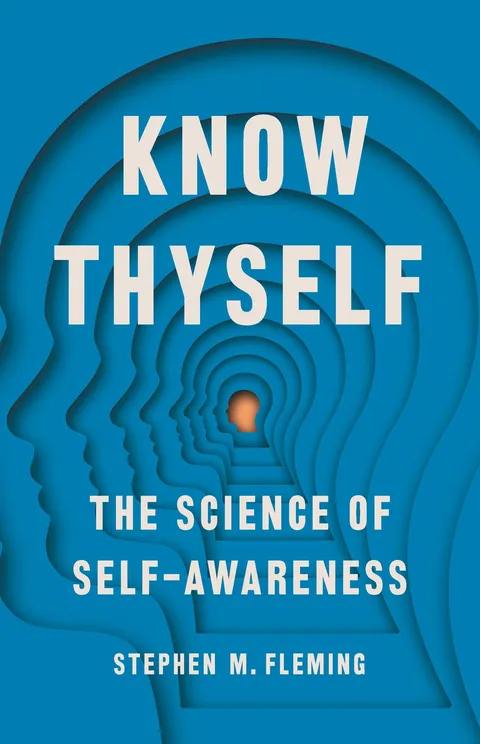
Unlock the secrets to understanding yourself and others with the surprising science of the human mind's greatest power: introspection.
Whether in a court room, a doctor’s office, a gameshow’s hot seat, or a student’s desk, we are always trying to answer that question. Should we accept eyewitness testimony or a physician’s diagnosis? Do we really want to risk it all on a final question? And what should we be studying in order to do as well as possible on a test? In short, how do we know what we and others know—or as importantly, don’t know?
As cognitive neuroscientist Stephen Fleming shows in Know Thyself, we do this with metacognition. Metacognition, or thinking about thinking, is the most important tool we have for understanding our own mind. Metacognition is an awesome power: It is what enables self-awareness as well as what lets us think about the minds of others. It is the ultimate human trait, and in its most rarefied forms is a power that neither other animals, nor our current artificial intelligences, have. Metacognition teaches us the limits of our own knowledge. Once we understand what it is and how it works, we can improve our performance and make better decisions. For example, on the SAT, it helps us gauge when we should skip a question rather than lose points getting an answer wrong.
Know Thyself, like the metacognition itself, is equal parts scientific, philosophical, and practical. And that means, like Thinking, Fast and Slow and Predictably Irrational, it’s that rarest of books: one that can both expand our minds and change our lives.
Stephen M Fleming
Stephen M. Fleming is a cognitive neuroscientist at University College London. He is a Wellcome/Royal Society Sir Henry Dale Fellow at the Department of Experimental Psychology and Principal Investigator at the Wellcome Centre for Human Neuroimaging, where he leads the Metacognition Group. He lives in London.








Why Readwise Books?
Readwise Books is an ebook & audiobook platform that automatically logs how much you and your friends read, making it fun and easy to read more. Learn more →