Report an issue
Tell us what's wrong and we'll take a look.
Thanks – we got it. We'll review and follow up if needed.
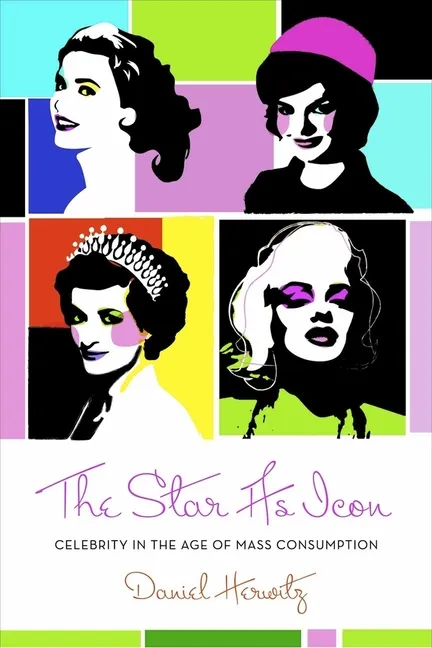
Herwitz portrays the star icon as caught between transcendence and trauma. An effervescent being living on a distant, exalted planet, the star icon is also a melodramatic heroine desperate to escape her life and the ever-watchful eye of the media. The public buoys her up and then eagerly watches her fall, her collapse providing a satisfying conclusion to a story sensationally told--while leaving the public yearning for a rebirth.
Herwitz locates this double life in the opposing tensions of film, television, religion, and consumer culture, offering fresh perspectives on these subjects while ingeniously mapping society's creation (and destruction) of these special aesthetic stars. Herwitz has a soft spot for popular culture yet remains deeply skeptical of public illusion. He worries that the media distances us from even minimal insight into those who are transfigured into star icons. It also blinds us to the shaping of our political present.
Daniel Herwitz
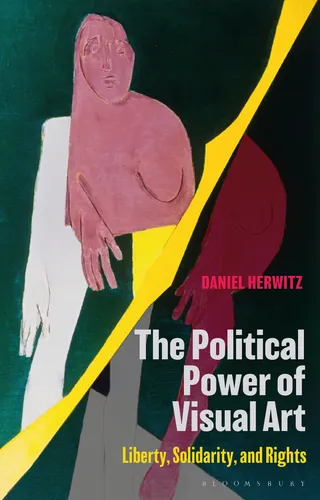
Daniel Herwitz lived and taught in South Africa during the moment of democratic transition and splits his time between Ann Arbor and Cape Town. He is Fredric Huetwell Professor of Comparative Literature, Philosophy and History of Art at the University of Michigan where from 2002 to 2012 he directed the Institute for the Humanities. He has written widely on contemporary art, culture, and politics in a cosmopolitan way, on philosophical aesthetics, and on transitional justice. His latest book is The Political Power of Visual Art (Bloomsbury Academic, 2021).
More by Daniel Herwitz



Why Readwise Books?
Readwise Books is an ebook & audiobook platform that automatically logs how much you and your friends read, making it fun and easy to read more. Learn more →