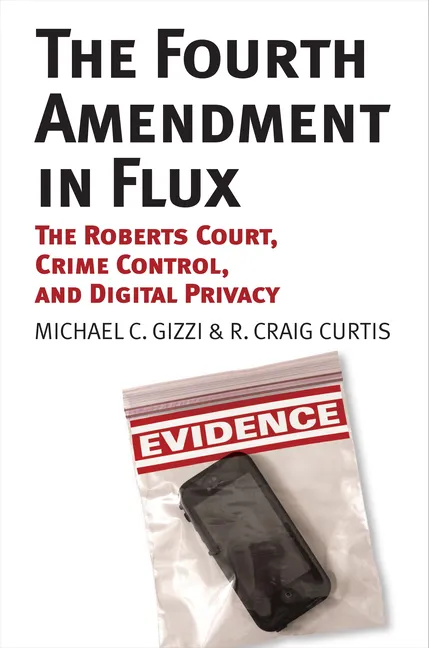
The Fourth Amendment in Flux
The Roberts Court, Crime Control, and Digital Privacy
Report an issue
Tell us what's wrong and we'll take a look.
Thanks – we got it. We'll review and follow up if needed.
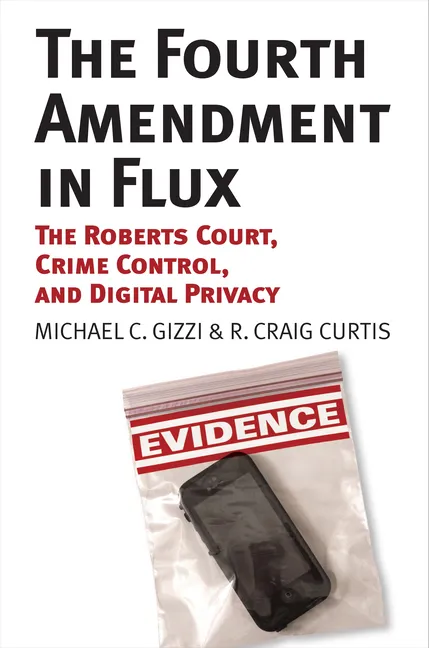
Cell phones, GPS tracking devices, drones, wiretaps, the Patriot Act, constantly changing technology, and a political culture that emphasizes crime control create new challenges for Fourth Amendment interpretation and jurisprudence. This work exposes the tensions caused by attempts to apply pretechnological legal doctrine to modern problems of digital privacy. In their analysis of the Roberts Court's relevant decisions, Gizzi and Curtis document the different approaches to the law that have been applied by the justices since the Obama nominees took their seats on the court. Their account, combining law, political science, and history, provides insight into the court's small group dynamics, and traces changes regarding search and seizure law in the opinions of one of its longest serving members, Justice Antonin Scalia.
At a time when issues of privacy are increasingly complicated by technological advances, this overview and analysis of Fourth Amendment law is especially welcome--an invaluable resource as we address the enduring question of how to balance freedom against security in the context of the challenges of the twenty-first century.
Michael C Gizzi
Michael C. Gizzi is associate professor of criminal justice at Illinois State University.
R. Craig Curtis is associate professor of political science at Bradley University.


Why Readwise Books?
Readwise Books is an ebook & audiobook platform that automatically logs how much you and your friends read, making it fun and easy to read more. Learn more →