
The Last Day of a Condemned Man
Report an issue
Tell us what's wrong and we'll take a look.
Thanks – we got it. We'll review and follow up if needed.

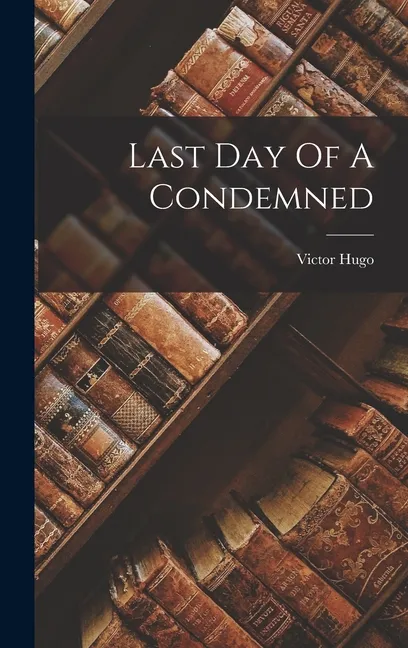
Victor Hugo's impassioned early work carries the same power and universality as Les Misérables. A vocal opponent to the barbarity of the guillotine, Hugo attempted to arouse compassion in the service of justice. This tale distills his beliefs and offers a highly significant contribution to the ongoing debate over the death penalty. A new Foreword by activist David Dow examines the message and relevance of Hugo's story to modern society.
Victor Hugo
The best-known of the French Romantic writers, Victor Hugo was a poet, novelist, dramatist, and political critic. Hugo was an avid supporter of French republicanism and advocate for social and political equality, themes that reflect most strongly in his works Les Misérables, Notre-Dame de Paris (The Hunchback of Notre-Dame), and Le Dernier jour d'un condamné (The Last Day of a Condemned Man). Hugo’s literary works were successful from the outset, earning him a pension from Louis XVIII and membership in the prestigious Académie française, and influencing the work of literary figures such as Albert Camus, Charles Dickens, and Fyodor Dostoevsky. Elevated to the peerage by King Louis-Philippe, Hugo played an active role in French politics through the 1848 Revolution and into the Second and Third Republics. Hugo died in 1885, revered not only for his influence on French literature, but also for his role in shaping French democracy. He is buried in the Panthéon alongside Alexandre Dumas and Émile Zola.
More by Victor Hugo


Why Readwise Books?
Readwise Books is an ebook & audiobook platform that automatically logs how much you and your friends read, making it fun and easy to read more. Learn more →