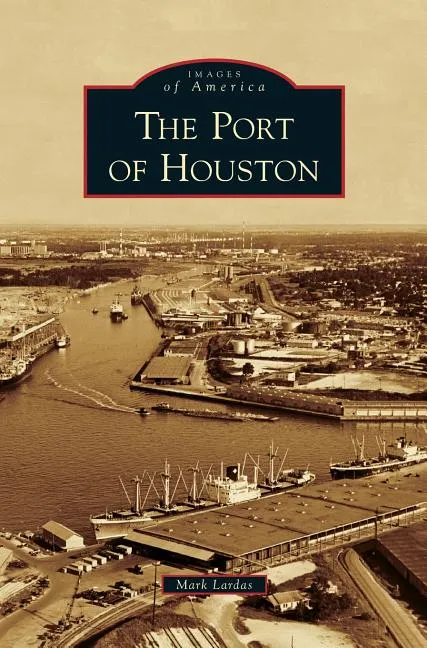
Port of Houston
Report an issue
Tell us what's wrong and we'll take a look.
Thanks – we got it. We'll review and follow up if needed.
To reach the Port of Houston's Turning Basin, a ship must travel 50 miles along a narrow and twisting channel that passes through Galveston Bay, the San Jacinto River, and Buffalo Bayou. Despite this improbable location, Houston has the world's largest landlocked port. Measured by annual tonnage shipped, the Port of Houston is the second-largest port in the United States. Its docks, wharves, and facilities cover more than 25 miles. The port starts its second century as a seaport in 2014. Its transformation from a crowded river port into an industrial giant is fascinating. It is a tale of technology, geography, politics, hard work, and Texas brag--mixed with a little luck.
Mark Lardas
Mark Lardas has always been fascinated by things related to the sea and sky. From building models of ships and aircraft as a teen, he then studied Naval Architecture and Marine Engineering, but his interest in aviation led him to take a job on the then-new Space Shuttle program, where he worked for the next 30 years as a navigation engineer. Currently he develops commercial aircraft systems as a quality assurance manager. He has written numerous books on military, naval or maritime history.
More by Mark Lardas













Why Readwise Books?
Readwise Books is an ebook & audiobook platform that automatically logs how much you and your friends read, making it fun and easy to read more. Learn more →