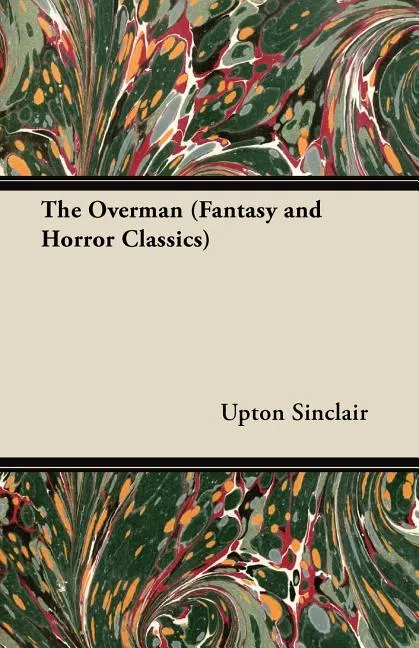
The Overman (Fantasy and Horror Classics)
Report an issue
Tell us what's wrong and we'll take a look.
Thanks – we got it. We'll review and follow up if needed.

A forgotten tale of madness, a dark island, and the limits of the human spirit.
From Upton Sinclair, the Pulitzer Prize-winning author of The Jungle and champion of social realism, comes a rare excursion into the territory of psychological horror.
The Overman is a compelling early short story that delves into themes of isolation and the breakdown of civilization, echoing the dark fables of the era. A scientist named Edward desperately searches for his brother, Daniel, who was lost at sea. Years later, Edward encounters a mysterious survivor of the shipwreck--a man who claims to know Daniel's fate.
The survivor's story plunges into a nightmare narrative of an isolated island where men, stripped of social convention, devolve into a savage state, creating their own brutal, philosophical dictator. Is this a terrifying account of primal regression, or the delusion of a broken mind? This story is a fascinating departure from Sinclair's usual political themes, exploring the "survival of the fittest" in a context far removed from the Chicago stockyards.
Upton Sinclair
Upton Sinclair (1878–1968) was a Pulitzer Prize–winning author, activist, and politician whose novel The Jungle (1906) led to the passage of the Federal Meat Inspection Act and the Pure Food and Drug Act. Born into an impoverished family in Baltimore, Maryland, Sinclair entered City College of New York five days before his fourteenth birthday. He wrote dime novels and articles for pulp magazines to pay for his tuition, and continued his writing career as a graduate student at Columbia University. To research The Jungle, he spent seven weeks working undercover in Chicago’s meatpacking plants. The book received great critical and commercial success, and Sinclair used the proceeds to start a utopian community in New Jersey. In 1915, he moved to California, where he founded the state’s ACLU chapter and became an influential political figure, running for governor as the Democratic nominee in 1934. Sinclair wrote close to one hundred books during his lifetime, including Oil! (1927), the inspiration for the 2007 movie There Will Be Blood; Boston (1928), a documentary novel revolving around the Sacco and Vanzetti case; The Brass Check, a muckraking exposé of American journalism, and the eleven novels in Pulitzer Prize–winning Lanny Budd series.
More by Upton Sinclair



Why Readwise Books?
Readwise Books is an ebook & audiobook platform that automatically logs how much you and your friends read, making it fun and easy to read more. Learn more →