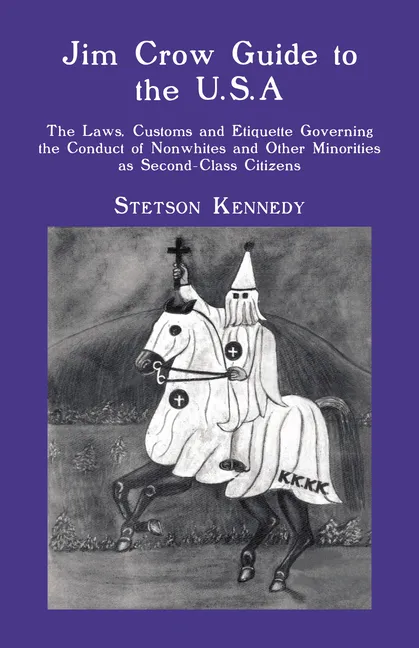
Jim Crow Guide to the U.S.A.
The Laws, Customs and Etiquette Governing the Conduct of Nonwhites and Other Minorities as Second-Class Citizens
Report an issue
Tell us what's wrong and we'll take a look.
Thanks – we got it. We'll review and follow up if needed.
"A history of the United States that is almost incredible." --Jean-Paul Sartre, Les Temps Modernes
Jim Crow Guide to the U.S.A. by Stetson Kennedy is a bold exposé of America's institutionalized racism, originally published in 1959 and hailed as a landmark in civil rights literature. With unflinching clarity, Kennedy documents the laws, customs, and social codes that relegated nonwhite citizens to second-class status under the Jim Crow system. From the mistreatment of Native Americans to the exclusionary immigration policies targeting Asians and Africans, the book maps the presence of race-based politics across every facet of American life--housing, education, employment, and even burial.
What makes this work especially influential is its international resonance. The famed French existentialist Jean-Paul Sartre championed the book's publication in Europe, recognizing its power to illuminate the contradictions between American democratic ideals and racial realities. Sartre's endorsement helped position the book as a global indictment of racial injustice, aligning it with anti-colonial and human rights movements worldwide. Provocative, meticulously researched, and deeply human, Jim Crow Guide to the U.S.A. remains a vital historical document and a call to conscience. It is not merely a guide--it is a mirror held up to a nation, reflecting truths that later generations were called on to address.





Why Readwise Books?
Readwise Books is an ebook & audiobook platform that automatically logs how much you and your friends read, making it fun and easy to read more. Learn more →