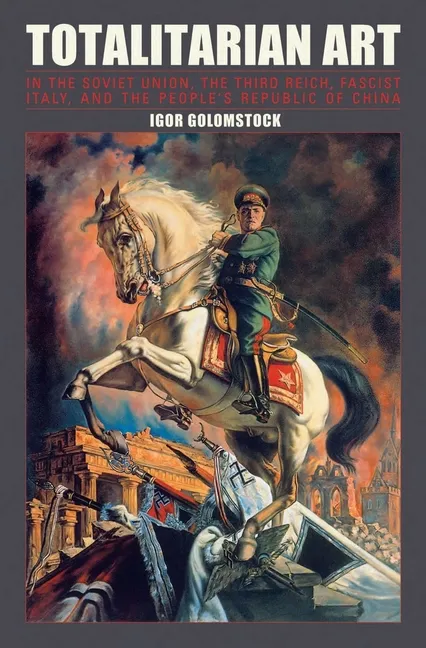
Totalitarian Art
In the Soviet Union, the Third Reich, Fascist Italy, and the People's Republic of China
Report an issue
Tell us what's wrong and we'll take a look.
Thanks – we got it. We'll review and follow up if needed.
In the Soviet Union, and later in Maoist China, theories of mass artistic appeal were used to promote the Revolution both at home and abroad. In Nazi Germany and Fascist Italy they asserted the putative grandeur of the epoch. All too often, art that served the Revolution became "total realism," and always it became a slave to the state and the cult of personality, and ultimately one more weapon in the arsenal of oppression.
Igor Golomstock gives a detailed appraisal of the forms that define totalitarian art and illustrates his text with more than 200 examples of its paintings, posters, sculpture, and architecture, and includes a powerful comparative visual essay which demonstrates the eerie similarity of the official art of these very different regimes.
Igor Golomstock
Igor Golomstock (1929-2017) was an art historian, translator, university lecturer, and radio broadcaster. He was born in Russia and emigrated to the UK.
More by Igor Golomstock


Why Readwise Books?
Readwise Books is an ebook & audiobook platform that automatically logs how much you and your friends read, making it fun and easy to read more. Learn more →