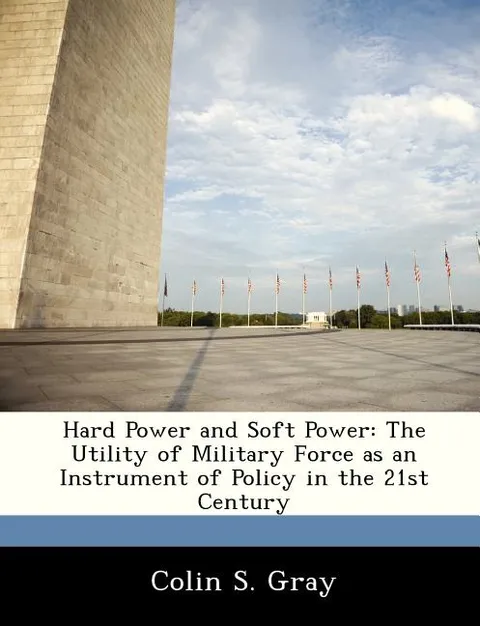
Hard Power and Soft Power
The Utility of Military Force as an Instrument of Policy in the 21st Century
Report an issue
Tell us what's wrong and we'll take a look.
Thanks – we got it. We'll review and follow up if needed.
Power is one of the more contestable concepts in political theory. In recent decades, scholars and commentators have chosen to distinguish between two kinds of power, "hard" and "soft." The former is achieved through military threat or use, and by means of economic menace or reward. The latter is the ability to have influence by co-opting others to share some of one's values and, as a consequence, to share some key elements on one's agenda for international order and security. Whereas hard power obliges its addressees to consider their interests in terms mainly of calculable costs and benefits, soft power works through the persuasive potency of ideas that foreigners find attractive. It is highly desirable if much of the world external to America wants, or can be brought to want, a great deal of what America happens to favor also. Coalitions of the genuinely willing have to be vastly superior to the alternatives.
Colin S. Gray
Colin S. Gray, professor of international politics and strategic studies at the University of Reading, England, and senior fellow at the National Institute for Public Policy, is the uthor of numerous books, including Modern Strategy and Strategy for Chaos: Revolutions in Military Affairs and the Evidence of History. He lives in Berkshire, England.
More by Colin S. Gray



Why Readwise Books?
Readwise Books is an ebook & audiobook platform that automatically logs how much you and your friends read, making it fun and easy to read more. Learn more →