Report an issue
Tell us what's wrong and we'll take a look.
Thanks – we got it. We'll review and follow up if needed.
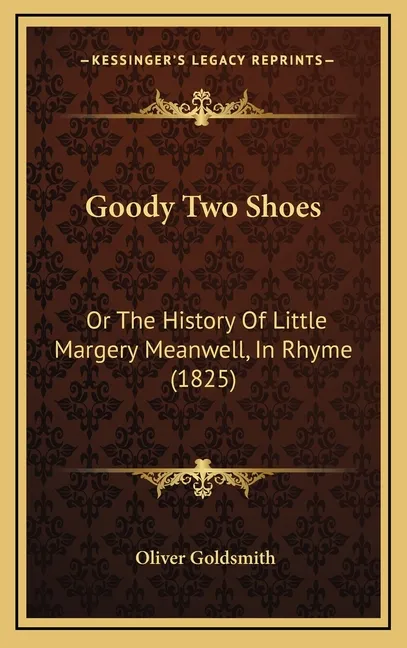
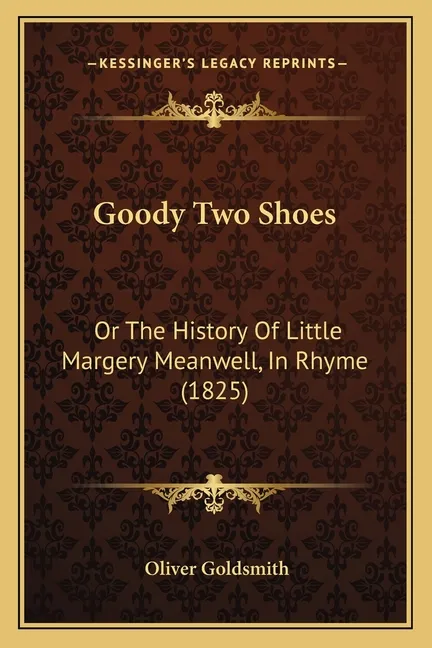
Goody Two Shoes: Or The History Of Little Margery Meanwell, In Rhyme is a children's book written by Oliver Goldsmith and published in 1825. The story follows the life of a young girl named Margery Meanwell, who is orphaned at a young age and raised by a kind-hearted clergyman. Margery is known for her cheerful and helpful demeanor, and she quickly becomes a beloved member of her community. Despite facing challenges and hardships along the way, Margery remains optimistic and determined to make the most of her life. The book is written in rhyme, making it a fun and engaging read for children of all ages. With its themes of kindness, perseverance, and the power of a positive attitude, Goody Two Shoes has become a classic of children's literature and is still enjoyed by readers today.This scarce antiquarian book is a facsimile reprint of the old original and may contain some imperfections such as library marks and notations. Because we believe this work is culturally important, we have made it available as part of our commitment for protecting, preserving, and promoting the world's literature in affordable, high quality, modern editions, that are true to their original work.
Oliver Goldsmith
Oliver Goldsmith was an Anglo-Irish author, playwright, dramatist, and poet who lived from 10 November 1728 to 4 April 1774. Goldsmith claimed to a biographer that he was born on November 10, 1728, yet his exact birthdate and year are unknown. He was either born in the Smith Hill House in the vicinity of Elphin, County Roscommon, or at Pallas, close to Ballymahon, County Longford, Ireland. His schooling seems to have mostly given him a liking for expensive clothing, card games, Irish tunes, and playing the flute. Goldsmith, a perpetual debtor and gambling addict, wrote a ton for London's publishers while working as a hack writer on Grub Street. To publish his 1758 translation of the memoirs of the Huguenot Jean Marteilhe, he assumed the alias ""James Willington"" at this time. His contemporaries regarded him as envious, impulsive, and disorganized, with a history of planning to immigrate to America but failing because he missed his ship. The incorrect diagnosis of his kidney ailment before his untimely death in 1774 may have contributed to it. Goldsmith was laid to rest in London's Temple Church. At the location of his interment, a memorial honoring him had previously been erected, but it had been destroyed in a 1941 air strike.
More by Oliver Goldsmith






Why Readwise Books?
Readwise Books is an ebook & audiobook platform that automatically logs how much you and your friends read, making it fun and easy to read more. Learn more →