Report an issue
Tell us what's wrong and we'll take a look.
Thanks – we got it. We'll review and follow up if needed.

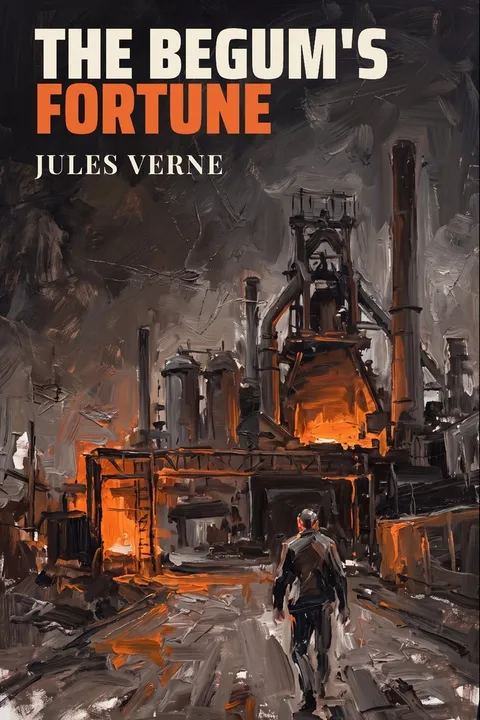
Jules Verne wrote The Begum's Fortune in 1879, and it might be his most prescient book. Two men-a French doctor and a German scientist-unexpectedly inherit a massive fortune from an Indian Begum. What they do with the money tells you everything you need to know about the clash between their worldviews.
Dr. François Sarrasin builds France-Ville, a city dedicated to health, education, and human well-being. It's the Enlightenment dream made concrete. Professor Schultze, on the other hand, pours his inheritance into Stahlstadt-a fortress city designed for one purpose: manufacturing weapons. Every factory, every worker, every innovation exists to perfect the tools of war.
The conflict that develops isn't just philosophical. Schultze doesn't want to coexist with Sarrasin's peaceful experiment; he wants to destroy it. What starts as a story about competing visions of progress turns into something more urgent: a warning about what happens when brilliant minds devote themselves to destruction rather than creation.
Verne was writing in the 1870s, but he saw where industrial technology was heading. He understood that the same innovations that could cure disease or improve lives could just as easily be weaponized. The Begum's Fortune raises questions we're still wrestling with: Who decides how technology gets used? What happens when power falls into the wrong hands? Can progress and morality coexist, or does advancement always come with a body count?
This edition updates the language for modern readers without losing Verne's edge. If you're into science fiction that actually grapples with the ethics of technology rather than just celebrating gadgets, this one's worth your time.

Jules Verne
Jules Verne (1828-1905) is considered by many the father of science fiction. Born in Nantes, France, he studied law but turned to writing opera libretti until the 1863 publication of Five Weeks in a Balloon, the first of his Extraordinary Voyages series. Its success encouraged him to produce a number of classic and prophetic science fiction novels, including Journey to the Center of the Earth and Twenty Thousand Leagues under the Sea. His stories foresaw many scientific and technological developments, including the submarine, television, and space travel.
More by Jules Verne







Why Readwise Books?
Readwise Books is an ebook & audiobook platform that automatically logs how much you and your friends read, making it fun and easy to read more. Learn more →