Report an issue
Tell us what's wrong and we'll take a look.
Thanks – we got it. We'll review and follow up if needed.
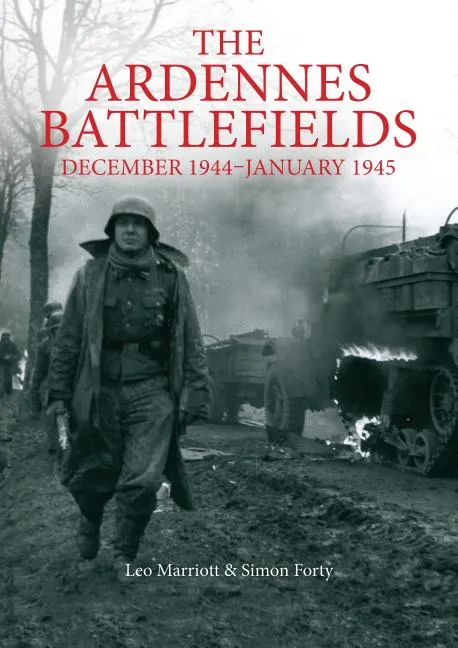
Strategic pipedream or not, the attack was furious and drained the Eastern Front of reinforcements: 12 armored and 29 infantry divisions, some 2,000 tanks and assault guns--mainly PzKpfw IVs (800), Panthers (750) and Tigers (250 including some of the new King Tigers)-- spearheaded the assault, which smashed into the American First and Ninth Armies.
Near-complete surprise was achieved thanks to a combination of Allied overconfidence, preoccupation with offensive plans, and poor reconnaissance. The Germans attacked where least expected--the forested Ardennes--a weakly defended section of the Allied line, taking advantage of the weather conditions, which grounded the Allies' overwhelmingly superior air forces. The Allied response was magnificent. Initial reverses brought out the best of Eisenhower's armies, which fought with determination and grit against the enemy and the elements. The harsh battles are best summed up by the defense of the northern shoulder around the Elsenborn Ridge, the battle for St. Vith, and in the south the siege of Bastogne, where the town's commander, Gen. McAuliffe, rejected German calls for surrender with the pithy reply: "Nuts."
Within ten days, the German attack had been nullified. Patton, at the time planning an attack further south, wheeled his Third Army round in a brilliant maneuver that relieved Bastogne and set up a counterattack which would drive the Germans back behind the Rhine.
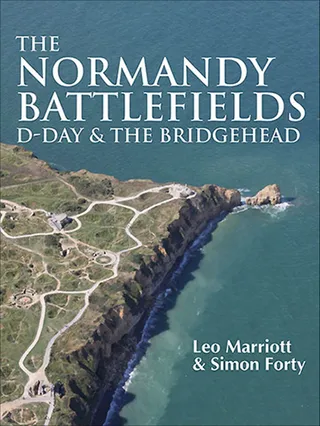
The Ardennes Battlefields includes details of what can be seen on the ground today--hardware, memorials, museums, and cemeteries--using a mixture of media to provide an overview of the campaign: maps old and new highlight what has survived and what hasn't; then and now photography allows fascinating comparisons with the images taken at the time; aerial photos give another angle to the story. The fifth book by Leo Marriott and Simon Forty on the Allied invasion of Europe provides a different perspective to this crucial battlefield.
Simon Forty
Simon Forty was educated in Dorset and the north of England before reading history at London University’s School of Slavonic and East European Studies. He has been involved in publishing since the mid-1970s, first as editor and latterly as author. His most recent titles include German Infantryman on the Eastern Front, Panzer Crewman, and Sturmartillerie Crewman in the Casemate Illustrated series.
More by Simon Forty
Leo Marriott
Leo Marriott has written numerous books on aviation, naval and military subjects including Treaty Cruisers, Catapult Aircraft, Jets at Sea and Early Jet Fighters: British and American 1944-1954. He is now retired after a fifty-year career as an air traffic controller but still maintains his pilot’s license flying a syndicate-owned Cessna 172. Apart from aviation and naval history, his other interests include sailing, photography and painting.
More by Leo Marriott


Why Readwise Books?
Readwise Books is an ebook & audiobook platform that automatically logs how much you and your friends read, making it fun and easy to read more. Learn more →