Report an issue
Tell us what's wrong and we'll take a look.
Thanks – we got it. We'll review and follow up if needed.
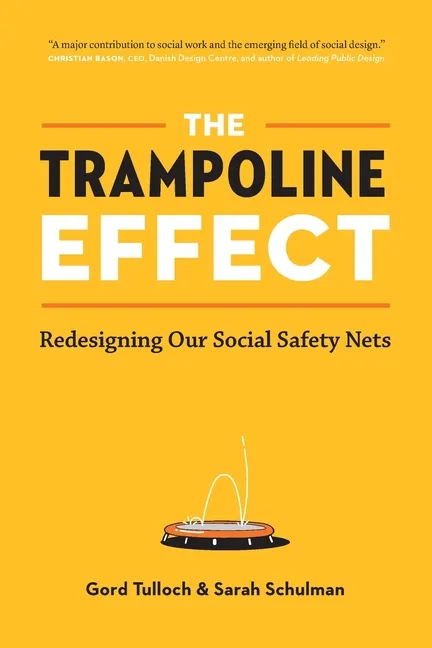
"Needy," "high-risk," "vulnerable," "slow." When the words people use to describe themselves are the same as the labels in their case files, what does that say about how our social welfare systems shape the identity and possibilities of those who use them?
In 2014, three disability organizations asked an international team of designers and social scientists to help them understand and address lived experiences of social isolation. The team moved into a social housing complex in the "loneliest city" in Canada, Vancouver, in order to get to know their neighbours with and without disabilities. The project resulted in a five-year journey of partnership and team building, co-design and prototyping, failure and learning.
The social sector is stuck. Seventy years since the rollout of the modern welfare state, Canada is left with a cracked and overburdened old-world system that struggles to provide basic care. Human needs for connection, belonging, purpose and agency are largely forgotten, or actively thwarted, which prevents people from living towards their potential.
Whether it is in the disability sector, or in mental health and addictions, homelessness, immigration and refugee services, youth at risk, etc., the patterns are the same: cultures of compliance; rigidity and inflexibility; deeply embedded assumptions, rhetoric and ideology; the constant recycling of similar solutions; counting up the things that don't really matter; hoarding power and control.
But how do you change it? How do you reshape a giant ecosystem with engrained approaches, habitual reactions and vested interests?
Instead of going big, Tulloch and Schulman suggest going small. They articulate a series of twelve strategies, or "stretches," that will enable organizations to reach in new directions. Things like attending to beauty, purpose, and identity, and designing roles that activate community capacity and bridge people to it. The aggregate of those efforts across time and contexts, they argue, can lead to a gradual repurposing of the social safety net.
This book is for anyone who plays a role in the social service system ecosystem, whether you are a frontline worker, manager or leader; researcher or policymaker; part of a vocational training or social worker program; a government funder, community foundation or philanthropist; or a professional association. It's also for social innovators and intrapreneurs trying to bring change to communities and organizations. Lastly, it's for social scientists and designers who are curious to see applications of their methods to the redesign of the welfare state.
Gord Tulloch
Gord Tulloch has performed many roles in the social services, some involving system building (quality assurance, policy analysis, technical writing, management) and some involving system delivery (front-line care worker, college/university instructor). Presently, he is the Director of Innovation at posAbilities, and a social intrapreneur who is trying to change the social service system from within. Gord holds a BA (Hons.) in philosophy and a Master of Arts in Liberal Studies.
Sarah Schulman
Sarah Schulman is the author of more than twenty works of fiction, nonfiction, and theater, and the producer and screenwriter of several feature films. Her writing has appeared in The New Yorker, The New York Times, Slate, and many other outlets. She is an Endowed Chair in Creative Writing at Northwestern, a Fellow at the New York Institute of Humanities, the recipient of multiple fellowships from the MacDowell Colony, Yaddo, and the New York Foundation for the Arts, and was presented in 2018 with Publishing Triangle's Bill Whitehead Award. She is also the cofounder of the MIX New York LGBT Experimental Film and Video Festival, and the co-director of the groundbreaking ACT UP Oral History Project. A lifelong New Yorker, she is a longtime activist for queer rights and female empowerment, and serves on the advisory board of Jewish Voice for Peace.
More by Sarah Schulman






Why Readwise Books?
Readwise Books is an ebook & audiobook platform that automatically logs how much you and your friends read, making it fun and easy to read more. Learn more →