Report an issue
Tell us what's wrong and we'll take a look.
Thanks – we got it. We'll review and follow up if needed.
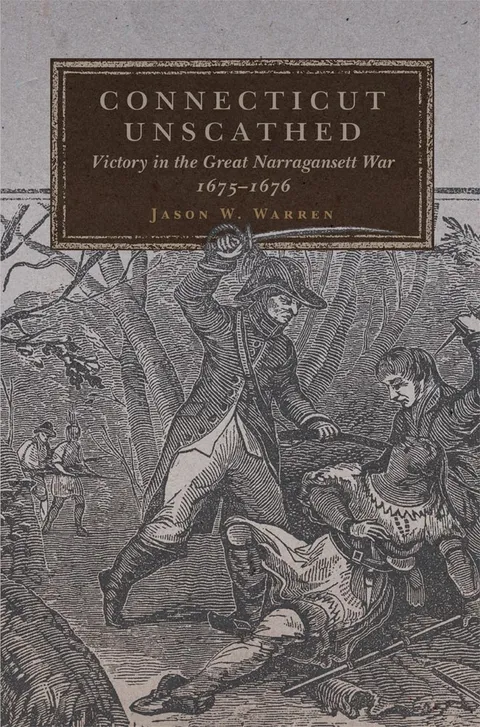
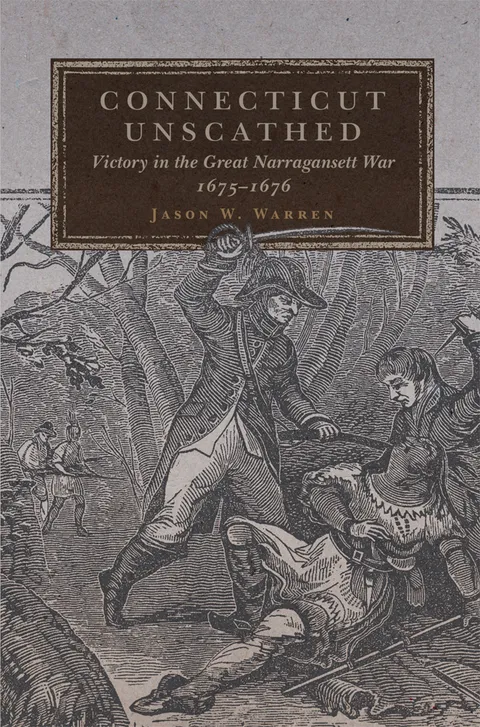
The conflict that historians have called King Philip's War still ranks as one of the bloodiest per capita in American history. An Indian coalition ravaged much of New England, killing six hundred colonial fighting men (not including their Indian allies), obliterating seventeen white towns, and damaging more than fifty settlements. The version of these events that has come down to us focuses on Plymouth and Massachusetts Bay--the colonies whose commentators dominated the storytelling. But because Connecticut lacked a chronicler, its experience has gone largely untold. As Jason W. Warren makes clear in Connecticut Unscathed, this imbalance has generated an incomplete narrative of the war.
Dubbed King Philip's War after the Wampanoag architect of the hostilities, the conflict, Warren asserts, should more properly be called the Great Narragansett War, broadening its context in time and place and indicating the critical role of the Narragansetts, the largest tribe in southern New England. With this perspective, Warren revises a key chapter in colonial history. In contrast to its sister colonies, Connecticut emerged from the war relatively unharmed. The colony's comparatively moderate Indian policies made possible an effective alliance with the Mohegans and Pequots. These Indian allies proved crucial to the colony's war effort, Warren contends, and at the same time denied the enemy extra manpower and intelligence regarding the surrounding terrain and colonial troop movements. And when Connecticut became the primary target of hostile Indian forces--especially the powerful Narragansetts--the colony's military prowess and its enlightened treatment of Indians allowed it to persevere.
Connecticut's experience, properly understood, affords a new perspective on the Great Narragansett War--and a reevaluation of its place in the conflict between the Narragansetts and the Mohegans and the Pequots of Connecticut, and in American history.
Jason W Warren
Major Jason W. Warren is Assistant Professor of History at the U.S. Army War College. He is the author of Connecticut Unscathed: Victory in the Great Narragansett War, 1675-1676.


Why Readwise Books?
Readwise Books is an ebook & audiobook platform that automatically logs how much you and your friends read, making it fun and easy to read more. Learn more →