Report an issue
Tell us what's wrong and we'll take a look.
Thanks – we got it. We'll review and follow up if needed.
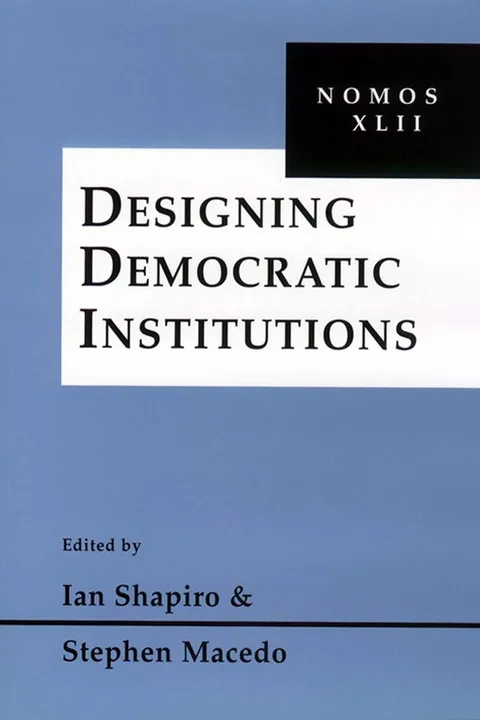
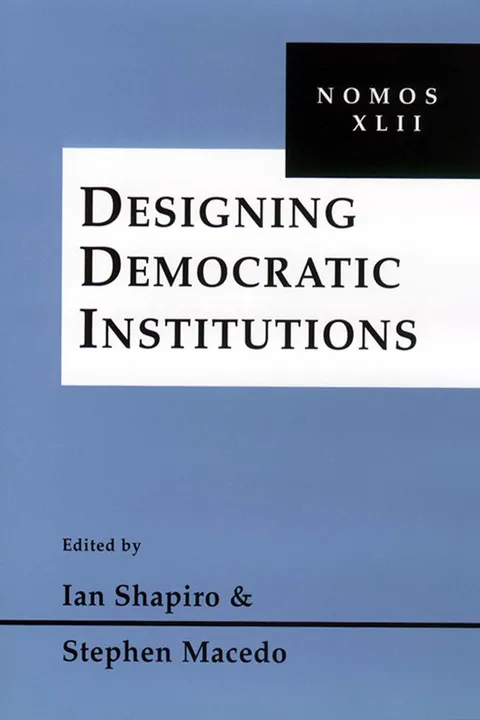
As the principles and practices of democracy continue to spread ever more widely, it is hard to imagine a corner of the globe into which they will not eventually penetrate. But the euphoria of democratic revolutions is typically short-lived, and usually followed by disgruntlement and even cynicism about the actual operation of democratic institutions. It is widely accepted that democracy is a good thing. However democrats have much work to do in improving the performance of democratic institutions.
The essays in this volume focus on this difficult and vital challenge: how can we improve the design of democratic institutions? How can public deliberation in democracies be enhanced? How can elections be reformed so as to dampen the excessive influence of special interests, especially those with money? How can democratic institutions be reformed so they can deal with issues that transcend the boundaries of the nation-state? And finally, how can democratic practices better take account of the internal plurality of societies that are ethnically or otherwise divided?
Contributors: Brooke Ackerly, Ian Ayres, Geoffrey Brennan, John Ferejohn, Alan Hamlin, Russell Hardin, Donald Horowitz, Stephen Macedo, Philip Petit, Philippe C. Schmitter, Ian Shapiro, Philippe Van Parjis, Iris Marion Young.
Ian Shapiro
Ian Shapiro is Sterling Professor of Political Science at Yale University and Henry R. Luce Director at the Yale Center for International and Area Studies. He is the author or editor of many books, including most recently The Flight from Reality in the Human Sciences and Death by a Thousand Cuts: The Fight over Taxing Inherited Wealth.


Why Readwise Books?
Readwise Books is an ebook & audiobook platform that automatically logs how much you and your friends read, making it fun and easy to read more. Learn more →