Report an issue
Tell us what's wrong and we'll take a look.
Thanks – we got it. We'll review and follow up if needed.
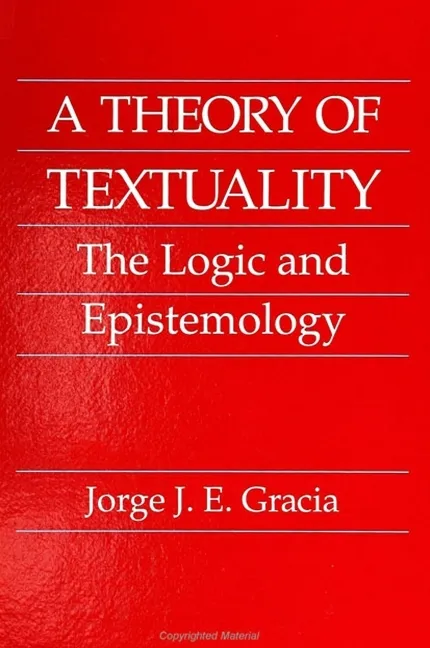
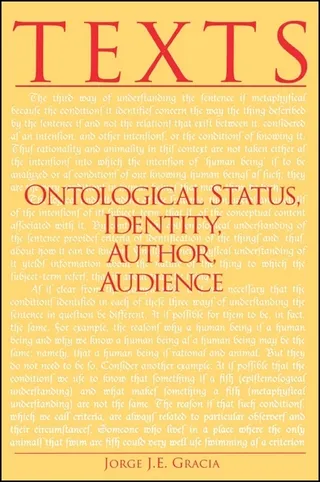
This book is just what it says it is: A theory of textuality divided into two parts, logical and epistemological.
This is the first comprehensive and systematic theory of textuality that takes into account the relevant views of both analytic and Continental thinkers and also of major historical figures. The author shows that most of the confusion surrounding textuality is the result of three factors: a too-narrow understanding of the category; a lack of a proper distinction among logical, epistemological, and metaphysical issues; and a lack of proper grounding of epistemological and metaphysical questions on logic analyses.
The author begins with a logical analysis of the notion of text resulting in a definition that serves as the basis for the distinctions he subsequently draws between texts on the one hand and language, artifacts, and art objects on the other; and for the classification of texts according to their modality and function. The second part of the book uses the conclusions of the first part to solve the various epistemological issues which have been raised about texts by philosophers of language, semioticians, hermeneuticists, literary critics, semanticists, aestheticians, and historiographers.
Jorge J. E. Gracia
Jorge J. E. Gracia is Distinguished Professor of Philosophy and Comparative Literature at the University at Buffalo, State University of New York. His many books include Painting Borges: Philosophy Interpreting Art Interpreting Literature; Images of Thought: Philosophical Interpretations of Carlos Estévez's Art; and Identity, Memory, and Diaspora: Voices of Cuban-American Artists, Writers, and Philosophers, all published by SUNY Press.
More by Jorge J. E. Gracia



Why Readwise Books?
Readwise Books is an ebook & audiobook platform that automatically logs how much you and your friends read, making it fun and easy to read more. Learn more →