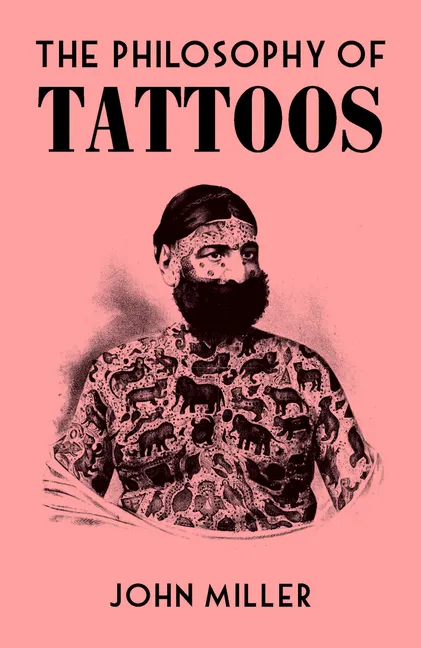
The Philosophy of Tattoos
Report an issue
Tell us what's wrong and we'll take a look.
Thanks – we got it. We'll review and follow up if needed.
Tattooing is an ancient practice with profound religious and cultural significance. While western tattooing centers on three main traditions - Polynesian, Japanese and Euro-American - it has been recorded more or less everywhere. Beginning with the birth of the tattoo, John Miller explores this unique expression of personal, cultural and national identity, the tension between tattoo's status as a fashion item and its roots in subculture, and the relevance of magic - a crucial part of tattooing's origins - in contemporary society. As the inherent shock factor of tattoos decreases, tattoos are becoming more extensive, public and challenging in response, prompting an upsurge in avant-garde tattoo projects and 'extreme' tattooing. The Philosophy of Tattoos investigates the innate human desire to mark the skin, and what tattooing might tell us about that obsessively asked question: what does it mean to be human?
John Miller
William Lane, sometimes known as John Miller, was an English-born journalist, author, supporter of Australian labor politics, and utopian socialist theorist. Lane was born into a poor household in Bristol, England. After excelling in school, he moved to Canada, first as a linotype operator, then as a reporter for the Detroit Free Press, where he met his future wife Ann Lane, née Macquire. He got active in the Australian labor movement after relocating in Australia with his wife and child, as well as his brother John, creating the Australian Labour Federation and becoming a prolific journalist for the movement. He wrote about labor rights and white nationalism, among other things.
More by John Miller





Why Readwise Books?
Readwise Books is an ebook & audiobook platform that automatically logs how much you and your friends read, making it fun and easy to read more. Learn more →