The Harbours of England
Report an issue
Tell us what's wrong and we'll take a look.
Thanks – we got it. We'll review and follow up if needed.
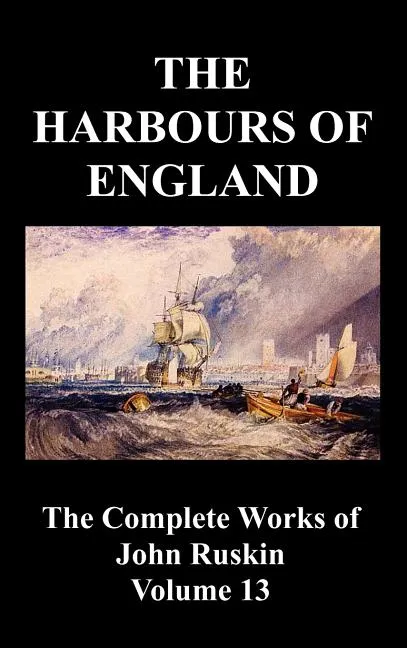
Explore the captivating maritime history of England through the insightful lens of John Ruskin in "The Harbours of England." This meticulously prepared republication delves into the coastal towns and ports that shaped the nation's seafaring legacy.
Ruskin's work offers a detailed look at the harbors that were vital to England's trade and naval power. From bustling commercial centers to strategic naval bases, the book illuminates the architectural and historical significance of these essential maritime locations. Discover the landscape and the ships that defined England's connection to the sea. A valuable resource for anyone interested in travel, architecture, and the history of ships and shipbuilding.
This work has been selected by scholars as being culturally important, and is part of the knowledge base of civilization as we know it.
This work is in the public domain in the United States of America, and possibly other nations. Within the United States, you may freely copy and distribute this work, as no entity (individual or corporate) has a copyright on the body of the work.
Scholars believe, and we concur, that this work is important enough to be preserved, reproduced, and made generally available to the public. We appreciate your support of the preservation process, and thank you for being an important part of keeping this knowledge alive and relevant.
John Ruskin
John Ruskin was an English writer, philosopher, art expert, and general know-it-all who lived from February 8, 1819, to January 20, 1900. He wrote about a lot of different things, like architecture, mythology, birds, literature, schooling, botany, politics, and the economy. Ruskin was very interested in Viollet le Duc's work and taught it to all of his students, including William Morris. He thought Violet le Duc's Dictionary was "the only book of any value on architecture." Ruskin used a lot of different writing styles and literary types. Besides essays and treatises, he also wrote poems, gave talks, traveled guides and manuals, letters, and even a fairy tale. He also drew and painted scenes with rocks, plants, birds, scenery, buildings, and decorations in great detail. His early writings on art were written in a very complicated style. Over time, he switched to simpler language that was meant to get his ideas across more clearly. He always stressed the links between nature, art, and society in everything he wrote. Up until the First World War, Ruskin had a huge impact on the second half of the 1800s. After a time of decline, his reputation has steadily gotten better since the 1960s, when a lot of academic studies of his work came out.
More by John Ruskin




Why Readwise Books?
Readwise Books is an ebook & audiobook platform that automatically logs how much you and your friends read, making it fun and easy to read more. Learn more →