Report an issue
Tell us what's wrong and we'll take a look.
Thanks – we got it. We'll review and follow up if needed.
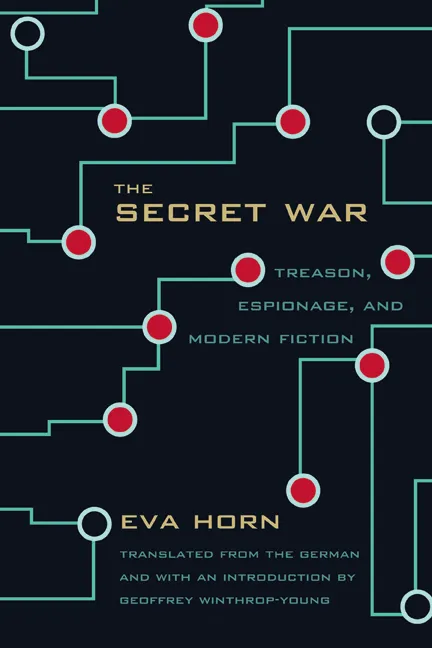
The Secret War marks a new direction in the cultural history and theory of intelligence gathering and state secrecy in the twentieth and early twenty-first centuries. While historical truth remains hidden from the public, Eva Horn finds in political fiction, which serves as both an indicator and a tool, a means to analyze political secrets. Starting with a general theory of treason and military intelligence as a specific type of political knowledge, the book charts the history of intelligence gathering from 1900 to 9/11. The Secret War analyzes literary and cinematic depictions of espionage from Rudyard Kipling and T. E. Lawrence to John Le Carré and Steven Spielberg. Horn considers these fictional accounts against the historical development of Western secret services from their inception in World War I to their struggle against current terrorist networks. The Secret War shows the crucial part fictions play in shaping conflicts, constructing "the enemy," and deciding political strategies.
Eva Horn
Eva Horn (PhD, Political Theory, University of Konstanz; habilitation, Social and Cultural Sciences, Europa-Universitat Viadrina) is Professor of German and Cultural Studies at the University of Vienna and Distinguished Visiting Max Kade Professor in the Department of Germanic Languages at Columbia. She is the author of (in English translation) The Secret War: Treason, Espionage, and Modern Fiction (Northwestern, 2013) and (in German) Trauer schreiben: Die Toten im Text der Goethezeit (Fink, 1998).
More by Eva Horn


Why Readwise Books?
Readwise Books is an ebook & audiobook platform that automatically logs how much you and your friends read, making it fun and easy to read more. Learn more →