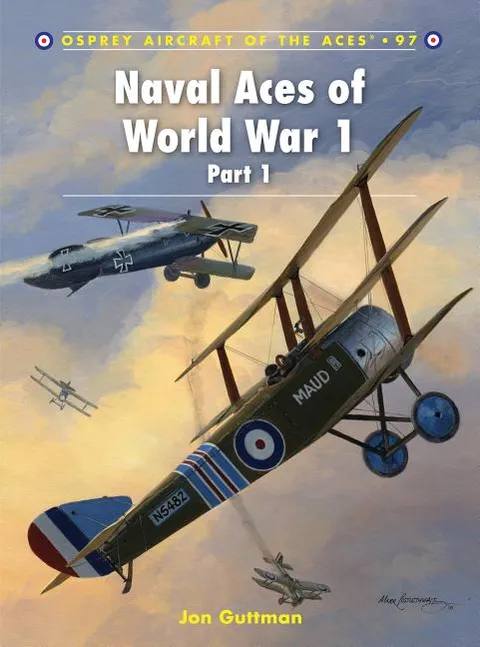
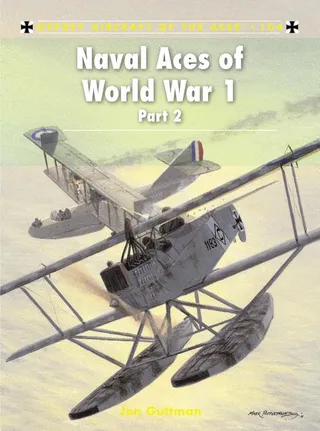
Naval Aces of World War 1, Part I
Report an issue
Tell us what's wrong and we'll take a look.
Thanks – we got it. We'll review and follow up if needed.
Though understandably overshadowed by their army colleagues, naval aviators played a significant role in World War 1, including some noteworthy contributions of fighter aviation. At a time when the Royal Flying Corps was struggling to match the 'Fokker Scourge' of 1915-16, the Royal Naval Air Service (RNAS) was first to use Sopwith's excellent line of scouts, such as the Pup, Triplane and Camel. Some RNAS pilots such as Raymond Collishaw, Robert A Little and Roderick Stanley Dallas rated among the most successful in the British Commonwealth. Their ranks also included David Ingalls, the only US Navy pilot to 'make ace' with eight victories in Camels while with No 213 Sqn RAF. The Germans, too, formed Marine Feld Jagdstaffeln to defend the northern coast of Flanders, and also produced a number of aces, led by Gotthard Sachsenberg and Theo Osterkamp. Besides these land fighters, the Germans produced at least two floatplane aces. Unique to World War 1 was the use of flying boats as fighters in combat, pioneered by Russians like Aleksandr de Seversky and Austria's Gottfried Banfield. The best flying boat fighter, however, was Italy's Macchi M.5, which produced two or three aces, and was also the mount of Charles H Hammann, the first American to earn the Medal of Honor in aerial combat.
Jon Guttman
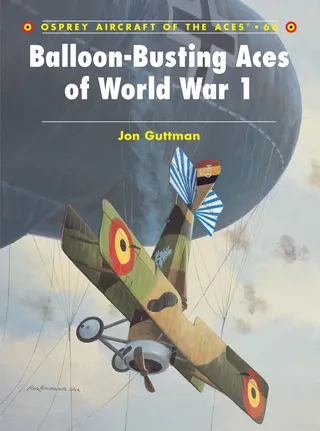
Jon Guttman, a resident of Leesburg, Virginia, is currently research director for Historynet.com. Specialising in World War I aviation, he has written numerous titles for Osprey including the popular Aircraft of the Aces 66: Balloon-Busting Aces of World War I.
More by Jon Guttman


Why Readwise Books?
Readwise Books is an ebook & audiobook platform that automatically logs how much you and your friends read, making it fun and easy to read more. Learn more →