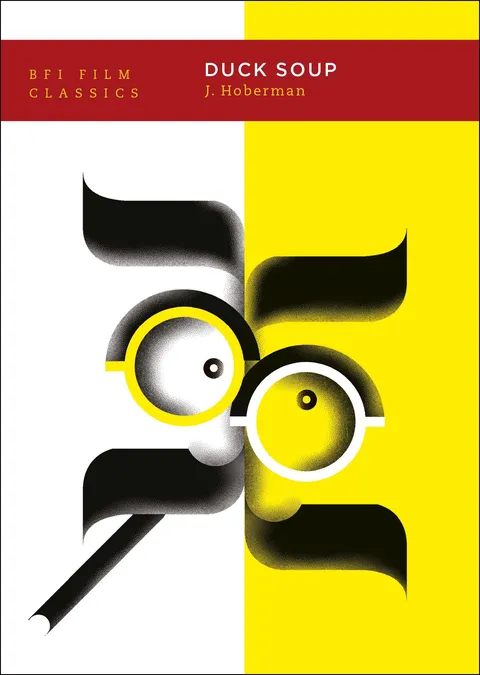
Duck Soup
Report an issue
Tell us what's wrong and we'll take a look.
Thanks – we got it. We'll review and follow up if needed.
The Marx Brothers are universally considered to be classic Hollywood's preeminent comedy team and Duck Soup is generally regarded as their quintessential film. A topical satire of dictatorship and government in general, the movie was a critical failure and box-office let-down on its initial release in 1933.
J. Hoberman's study of the film traces its reputation history, from the initial disappointment of its release, to its rise to cult status in the 1960s when the Marx's anarchic, anti-establishment humor seemed again timely. Hoberman places Duck Soup, alongside analogous comedies-Dr. Strangelove (1964), the Beatles films, Morgan! (1966), The President's Analyst (1967) and The Producers (1968). It attained canonical stature as a touchstone for Woody Allen and would be recognized by the Library of Congress in the 1990s.
Hoberman's analysis provides a historical and political context as well as an in-depth production history, drawing on primary sources and emphasizing director McCarey's prior work along with the Marx Brothers as well as the situation at Paramount, a substantial synopsis, and an account of the movie's initial reception, concluding with its subsequent elevation to comic masterpiece.
J. Hoberman
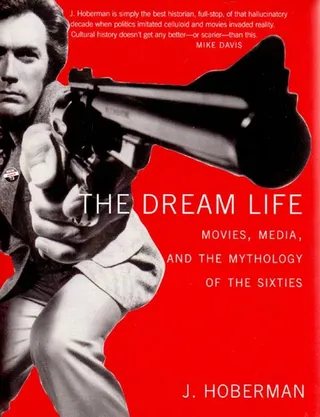
J. Hoberman was for over three decades a film and culture critic for The Village Voice. His previous books have explored the subculture of midnight movies, the rise and fall of Yiddish-language cinema, the international Communist avantgarde, SoHo performance art, and the underground filmmaker Jack Smith. His "found illusions" trilogy-which includes The Dream Life, Make My Day, and An Army of Phantoms-used Hollywood to refract the history of the Cold War.
More by J. Hoberman




Why Readwise Books?
Readwise Books is an ebook & audiobook platform that automatically logs how much you and your friends read, making it fun and easy to read more. Learn more →