Report an issue
Tell us what's wrong and we'll take a look.
Thanks – we got it. We'll review and follow up if needed.
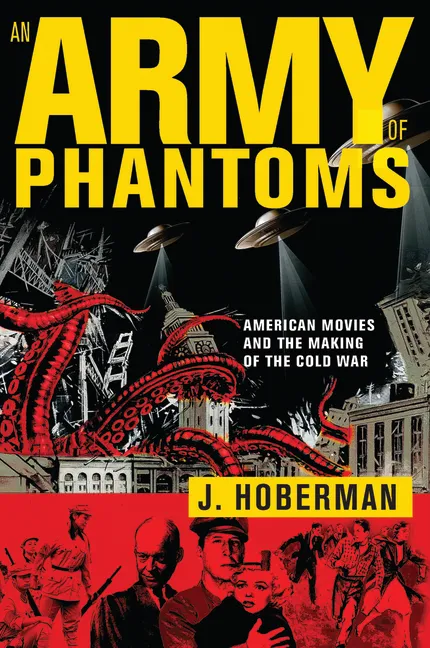
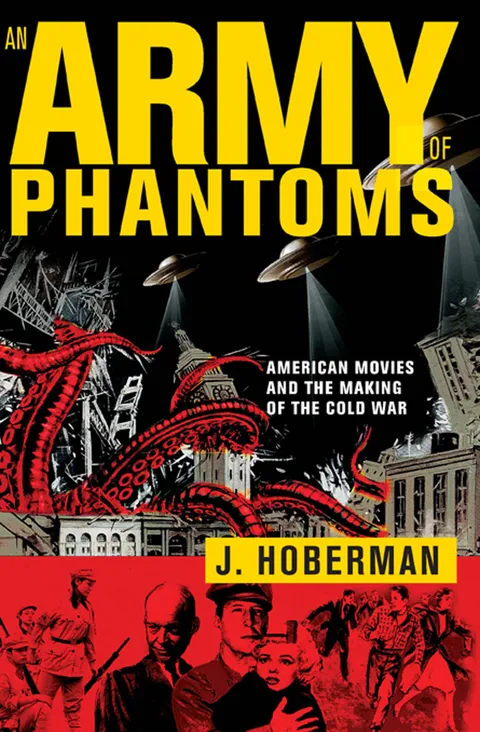
The film critic's sweeping analysis of American cinema in the Cold War era is both "utterly compulsive reading [and] majestic" in its "breadth and rigor" (Film Comment). An Army of Phantoms is a major work of film history and cultural criticism by leading film critic J. Hoberman. Tracing the dynamic interplay between politics and popular culture, Hoberman offers "the most detailed year-by-year look at Hollywood during the first decade of the Cold War ever published, one that takes film analysis beyond the screen and sets it in its larger political context" (Los Angeles Review of Books). By "tell[ing] the story not just of what's on the screen but of what played out behind it," Hoberman demonstrates how the nation's deep-seated fears and wishes were projected onto the big screen. In this far-reaching work of historical synthesis, Cecil B. DeMille rubs shoulders with Douglas MacArthur, atomic tests are shown on live TV, God talks on the radio, and Joe McCarthy is bracketed with Marilyn Monroe (The American Scholar). From cavalry Westerns to apocalyptic sci-fi flicks, and biblical spectaculars; from movies to media events, congressional hearings and political campaigns, An Army of Phantoms "remind[s] you what criticism is supposed to be: revelatory, reflective and as rapturous as the artwork itself" (Time Out New York). "An epic . . . alternately fevered and measured account of what might be called the primal scene of American cinema." —Cineaste "There's something majestic about the reach of Hoberman's ambitions, the breadth and rigor of his research, and especially the curatorial vision brought to historical data." —Film Comment
J. Hoberman
J. Hoberman was for over three decades a film and culture critic for The Village Voice. His previous books have explored the subculture of midnight movies, the rise and fall of Yiddish-language cinema, the international Communist avantgarde, SoHo performance art, and the underground filmmaker Jack Smith. His "found illusions" trilogy-which includes The Dream Life, Make My Day, and An Army of Phantoms-used Hollywood to refract the history of the Cold War.
More by J. Hoberman


Why Readwise Books?
Readwise Books is an ebook & audiobook platform that automatically logs how much you and your friends read, making it fun and easy to read more. Learn more →