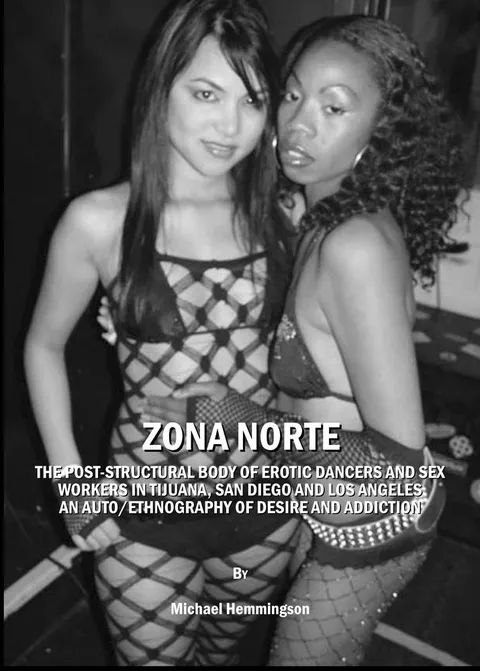
Zona Norte
The Post-Structural Body of Erotic Dancers and Sex Workers in Tijuana, San Diego and Los Angeles
Report an issue
Tell us what's wrong and we'll take a look.
Thanks – we got it. We'll review and follow up if needed.
Zona Norte: The Post-Structural Body of Erotic Dancers and Sex Workers in Tijuana, San Diego and Los Angeles: An Auto/ethnography of Desire and Addiction started out as an ethnographic study of prostitution on both sides of the U.S./Mexican border and, as cultural anthropologist Michael Hemmingson explains, turned inward as a study of the self, or what is referred to as auto/ethnography in today's lexicon of qualitative research. The author studies himself within the culture of the Other -- he examines his feelings, memories, and reactions as he conducts his participant observations and interviews in the field, questioning why he chose to research erotic and exotic dancers, strippers, hookers, and various sex workers on both sides of an international border, revealing how the subjects are alike, and how they are different, and how they survive in their worlds. Auto/ethnography is one of the fastest growing and popular sub-fields in sociology, anthropology, and communications today. Books and anthologies are widely published, special journal issues appear each year on the subject, and there are an increasing number of dissertations in all fields of qualitative research cropping up from universities in the United States, Great Britain, Germany, Australia, and New Zealand. Zona Norte is the latest contribution to this vibrant new approach to living the ethnographic life, as both a scholar and autobiographer.
Michael Hemmingson
The late Michael Hemmingson lived in LaJolla, California.
More by Michael Hemmingson











Why Readwise Books?
Readwise Books is an ebook & audiobook platform that automatically logs how much you and your friends read, making it fun and easy to read more. Learn more →