Report an issue
Tell us what's wrong and we'll take a look.
Thanks – we got it. We'll review and follow up if needed.
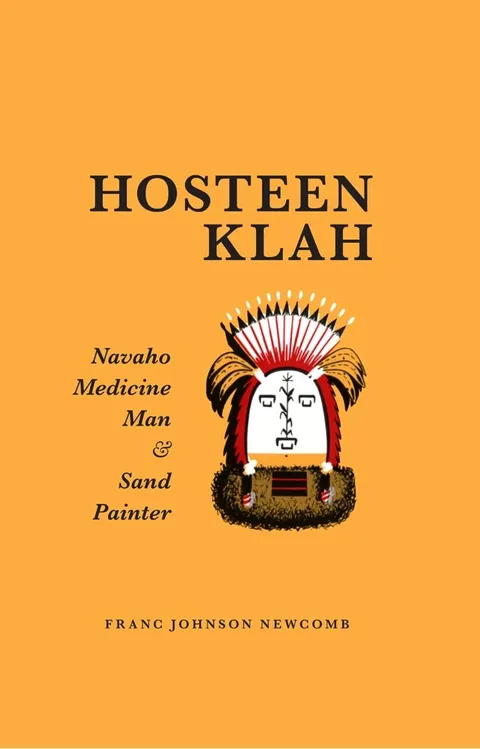
Navaho medicine man and sand painter Hosteen Klah bridged the long span from the old days of tribal greatness and warfare to the new days of tribal greatness and warfare to the new days of change and adjustment. Thus the story of Klah told here is also the story of his prominent family and reflects nearly two hundred important years of Navaho history. Klah's great-grandfather, Narbona, was war chief of the Navahos during their heyday. His mother made the "Long Walk" to the Bosque Redondo (Fort Sumner). After Klah was born in 1867, one year before the treaty establishing the Navaho Reservation, his family moved back to their ancestral land and slowly regained their former wealth. The most influential medicine man on the Reservation, Klah also became an expert weaver. Many of his sand-painting designs were woven on tapestries and so preserved, for he had no successor. The Museum of Navajo Ceremonial Art at Santa Fe has its nucleus Klah's tapestries, ceremonial effects, and drawings of his sand paintings.
Franc Johnson Newcomb
Franc Johnson Newcomb lived for twenty-five years on the Navajo Reservation at her husband's trading post, where Klah was their neighbor and friend. She wrote and lectured extensively on Navajo religion and symbolism and collected more than four hundred sand-painting sketches.
More by Franc Johnson Newcomb


Why Readwise Books?
Readwise Books is an ebook & audiobook platform that automatically logs how much you and your friends read, making it fun and easy to read more. Learn more →