Report an issue
Tell us what's wrong and we'll take a look.
Thanks – we got it. We'll review and follow up if needed.
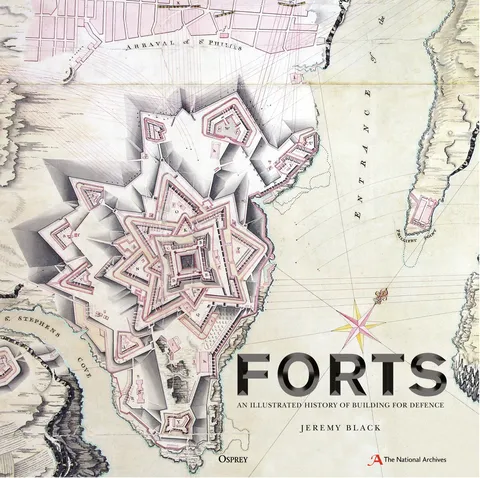
A fascinating, illustrated history of forts and castles from their earliest origins to the 20th century.
Ever since humans began to live together in settlements they have felt the need to organise some kind of defence against potentially hostile neighbours. Many of the earliest city states were built as walled towns, and during the medieval era, stone castles were built both as symbols of the defenders' strength and as protection against potential attack.
The advent of cannon prompted fortifications to become lower, denser and more complex, and the forts of the eighteenth and nineteenth centuries could appear like snowflakes in their complexity and beautiful geometry. Without forts, the history of America could have taken a very different course, pirates could have sailed the seas unchecked, and Britain itself could have been successfully invaded.
This book explains the history of human fortifications, and is beautifully illustrated using photographs, plans, drawings and maps to explain why they were built, their various functions and their immense historical legacy in laying the foundations of empire.








Jeremy Black
JEREMY BLACK is one of the country's most respected historians. Andrew Roberts described him as the 'most underrated thinker in Britain'. He is a Senior Fellow at Policy Exchange and Emeritus Professor of History at Exeter University and a renowned expert on the history of war. He appears regularly on TV and radio. His other books include Maps and History, The British Seaborne Empire and Rethinking World War Two.
More by Jeremy Black







Why Readwise Books?
Readwise Books is an ebook & audiobook platform that automatically logs how much you and your friends read, making it fun and easy to read more. Learn more →