Report an issue
Tell us what's wrong and we'll take a look.
Thanks – we got it. We'll review and follow up if needed.
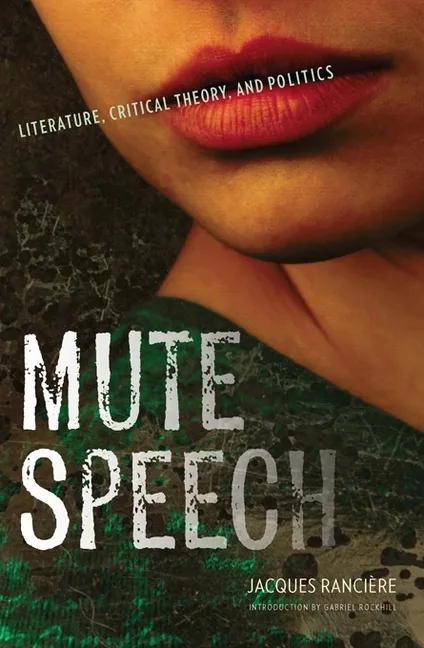
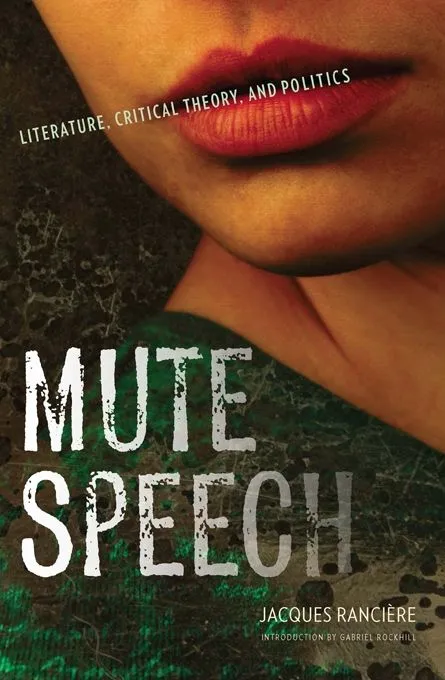
Jacques Rancière has continually unsettled political discourse, particularly through his questioning of aesthetic "distributions of the sensible," which configure the limits of what can be seen and said. Widely recognized as a seminal work in Rancière's corpus, the translation of which is long overdue, Mute Speech is an intellectual tour de force proposing a new framework for thinking about the history of art and literature. Rancière argues that our current notion of "literature" is a relatively recent creation, having first appeared in the wake of the French Revolution and with the rise of Romanticism. In its rejection of the system of representational hierarchies that had constituted belles-letters, "literature" is founded upon a radical equivalence in which all things are possible expressions of the life of a people. With an analysis reaching back to Plato, Aristotle, the German Romantics, Vico, and Cervantes and concluding with brilliant readings of Flaubert, Mallarmé, and Proust, Rancière demonstrates the uncontrollable democratic impulse lying at the heart of literature's still-vital capacity for reinvention.
Jacques Rancière
Jacques Ranci�re is Emeritus Professor of Philosophy at the University of Paris-VIII. His books include The Politics of Aesthetics, On the Shores of Politics, Short Voyages to the Land of the People, The Nights of Labor, Staging the People, and The Emancipated Spectator.
More by Jacques Rancière



Why Readwise Books?
Readwise Books is an ebook & audiobook platform that automatically logs how much you and your friends read, making it fun and easy to read more. Learn more →