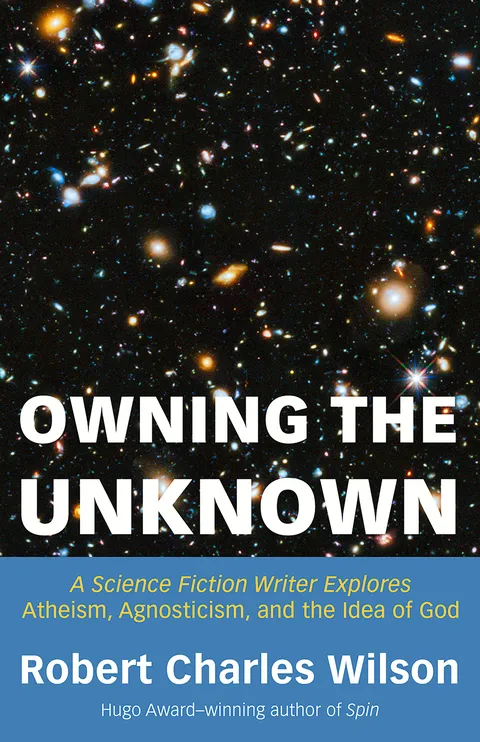
Owning the Unknown
A Science Fiction Writer Explores Atheism, Agnosticism, and the Idea of God
Report an issue
Tell us what's wrong and we'll take a look.
Thanks – we got it. We'll review and follow up if needed.
Although humankind today can peer far deeper into the universe than ever before, we still find ourselves surrounded by the unknown and perhaps the unknowable. All great science fiction has used the human imagination to explore that realm beyond the known, just as theistic religions have done since long before the genre existed. As Hugo Award-winning author Robert Charles Wilson argues in Owning the Unknown, the genre’s freewheeling speculation and systematic world-building make it it a unique lens for understanding, examining, and assessing the truth claims of religions in general and Christianity in particular. Drawing on his personal experience, his work as a science fiction writer, and his deep knowledge of the classics of the genre, he makes the case for what he calls intuitive atheism—an atheism drawn from everyday personal knowledge that doesn’t depend on familiarity with the scholarly debate about theology and metaphysics, any more than a robust personal Christianity does. And as he reminds us, the secrets that remain hidden beyond the borders of the known universe—should we ever discover them—will probably not resemble anything currently found in our most prized philosophies, our most sacred texts, or our most imaginative science fiction.
Robert Charles Wilson
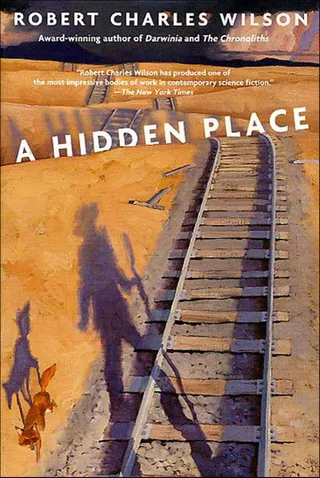
Robert Charles Wilson was born in California and lives in Toronto. His novel Spin won science fiction's Hugo Award in 2006. Earlier, he won the Philip K. Dick Award for his debut novel A Hidden Place; Canada's Aurora Award for Darwinia; and the John W. Campbell Award for The Chronoliths.
More by Robert Charles Wilson


Why Readwise Books?
Readwise Books is an ebook & audiobook platform that automatically logs how much you and your friends read, making it fun and easy to read more. Learn more →