Report an issue
Tell us what's wrong and we'll take a look.
Thanks – we got it. We'll review and follow up if needed.
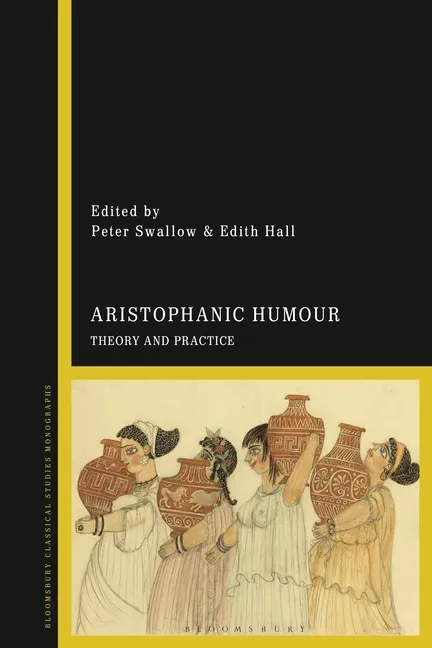
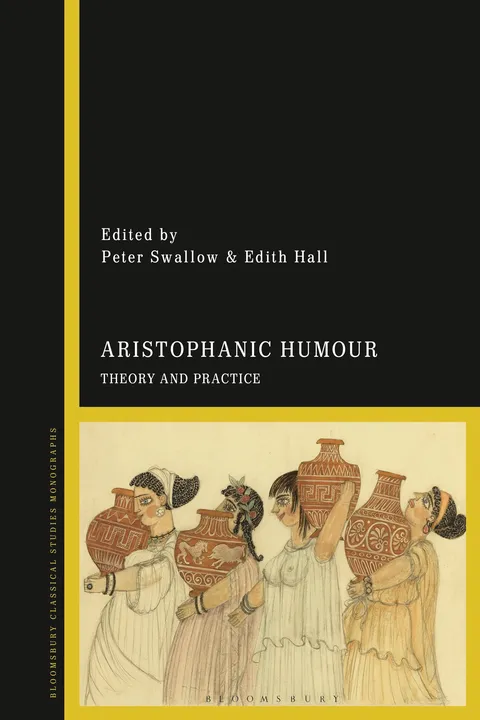
This volume sets out to discuss a crucial question for ancient comedy – what makes Aristophanes funny? Too often Aristophanes' humour is taken for granted as merely a tool for the delivery of political and social commentary. But Greek Old Comedy was above all else designed to amuse people, to win the dramatic competition by making the audience laugh the hardest. Any discussion of Aristophanes therefore needs to take into account the ways in which his humour actually works.
This question is addressed in two ways. The first half of the volume offers an in-depth discussion of humour theory – a field heretofore largely overlooked by classicists and Aristophanists – examining various theoretical models within the specific context of Aristophanes' eleven extant plays. In the second half, contributors explore Aristophanic humour more practically, examining how specific linguistic techniques and performative choices affect the reception of humour, and exploring the range of subjects Aristophanes tackles as vectors for his comedy. A focus on performance shapes the narrative, since humour lives or dies on the stage – it is never wholly comprehensible on the page alone.
Peter Swallow
Peter Swallow is currently completing his PhD under the supervision of Professor Edith Hall at King's College London, UK. He previously earned a Master of Arts from the University of St Andrews, UK, and a Master of Studies from St Hilda's College, Oxford, UK, both in Classics.
Edith Hall
Edith Hall is Professor of Classics at the University of Durham and Consultant Director of the Archive of Performances of Greek and Roman Drama in Oxford, UK. Her books on ancient Greek culture and its reception include The Return of Ulysses (2008), Greek Tragedy (2010), Adventures with Iphigenia in Tauris (2013) and Introducing the Ancient Greeks (2015).


Why Readwise Books?
Readwise Books is an ebook & audiobook platform that automatically logs how much you and your friends read, making it fun and easy to read more. Learn more →