
The Merchantman and the Pirate
Report an issue
Tell us what's wrong and we'll take a look.
Thanks – we got it. We'll review and follow up if needed.
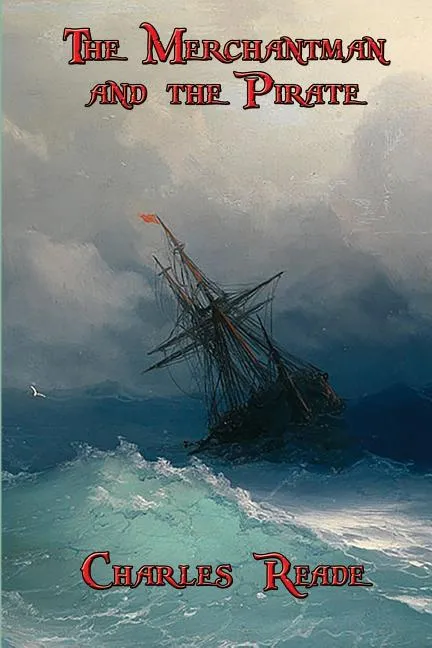
Ships at anchor reared their tall masts, here and there; and the broad stream was enlivened and colored by junks and boats of all sizes and vivid hues, propelled on the screw principle by a great scull at the stern, with projecting handles for the crew to work; and at times a gorgeous mandarin boat, with two great glaring eyes set in the bows, came flying, rowed with forty paddles by an armed crew, whose shields hung on the gunwale and flashed fire in the sunbeams; the mandarin, in conical and buttoned hat, sitting on the top of his cabin calmly smoking Paradise, alias opium, while his gong boomed and his boat flew fourteen miles an hour, and all things scuttled out of his celestial way. And there, looking majestically down on all these water ants, the huge Agra, cynosure of so many loving eyes and loving hearts in England, lay at her moorings; homeward bound.
Charles Reade
Charles Reade, a British novelist and dramatist, is best known for his work The Cloister and the Hearth. Charles Reade was born in Ipsden, Oxfordshire, to John Reade and Anne Marie Scott-Waring. He had at least four brothers. He received his B.A. from Magdalen College, Oxford, in 1835, and later became a fellow of the college. He then became dean of arts and vice-president, and in 1847 he received his D.C.L degree. His name was entered at Lincoln's Inn in 1836; he was chosen a Vinerian Fellow in 1842 and admitted to the bar in 1843. He maintained his fellowship at Magdalen throughout his life, but after receiving his degree, he spent the majority of his time in London. William Winwood Reade, the prominent historian, was his nephew. Reade began his writing career as a dramatist, and he elected to list "dramatist" first on his tombstone. As an author, he was always aware of the stage effect in scenes, settings, and conversation. His first comedy, The Ladies' Battle, debuted at the Olympic Theatre in May 1851. It was succeeded by Angela (1851), A Village Tale (1852), The Lost Husband (1852), and Gold (1853).
More by Charles Reade







Why Readwise Books?
Readwise Books is an ebook & audiobook platform that automatically logs how much you and your friends read, making it fun and easy to read more. Learn more →