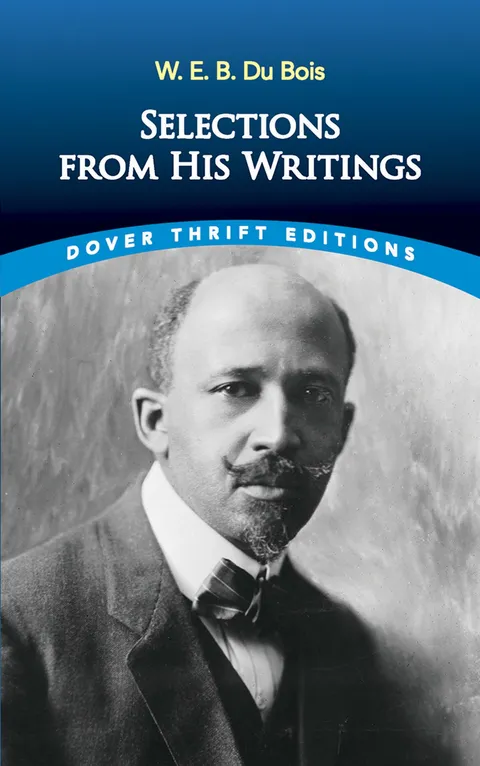
W. E. B. Du Bois: Selections from His Writings
Report an issue
Tell us what's wrong and we'll take a look.
Thanks – we got it. We'll review and follow up if needed.
A towering figure in African-American history, W. E. B. Du Bois (1868–1963) created a substantial literary legacy beyond such seminal works as The Souls of Black Folk. This volume highlights his other nonfiction writings and should be of great value to students in secondary school and college as well as to other readers.
Contents include:
Strivings of the Negro People (1897); A Negro Schoolmaster in the New South (1899); The Song of the Smoke (1899); The Black North: A Social Study (1901); The Sorrow Songs (1903); The Talented Tenth (1903); Credo (1904); Address of the Niagara Movement to the Country (1906); Religion in the South (1907); The Value of Agitation (1907); The Case (1907); The Burden of Black Women (1907); Evolution of the Race Problem (1909); Politeness (1911); Jesus Christ in Georgia (1911); The Upbuilding of Black Durham: The Success of the Negroes and Their Value to a Tolerant and Helpful Southern City (1912); Intermarriage (1913); Socialism and the Negro Problem (1913); Woman Suffrage (1915); Booker T. Washington (1915); The Shadow of Years (1918); Returning Soldiers (1919); Let Us Reason Together (1919); The Souls of White Folk (1920); The Damnation of Women (1920); and Again, Social Equality (1920).
W. E. B. Du Bois
W. E. B. Du Bois (1868–1963) was an American sociologist, civil rights activist, and author. A strong advocate of Pan-Africanism, he was the first black man to earn a doctorate from Harvard University and cofounded the National Association for the Advancement of Colored People (NAACP). His best-known book, The Souls of Black Folk, is widely considered to be one of the most important works in African American literature.
More by W. E. B. Du Bois







Why Readwise Books?
Readwise Books is an ebook & audiobook platform that automatically logs how much you and your friends read, making it fun and easy to read more. Learn more →