Report an issue
Tell us what's wrong and we'll take a look.
Thanks – we got it. We'll review and follow up if needed.
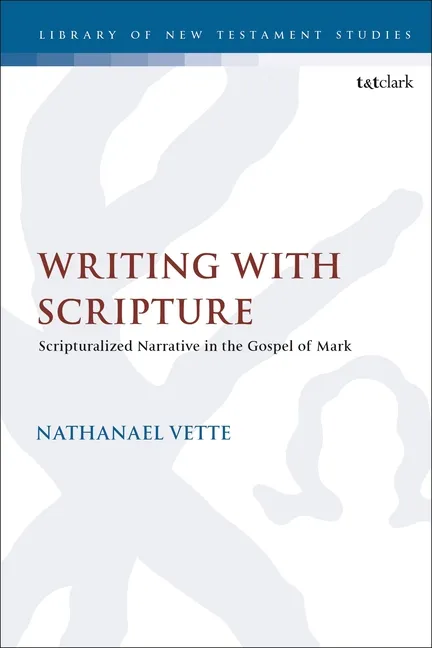
Nathanael Vette proposes that the Gospel of Mark, like other narrative works in the Second Temple period, uses the Jewish scriptures as a model to compose episodes and tell a new story. Vette compares Mark's use of scripture with roughly contemporary works like Pseudo-Philo, the Genesis Apocryphon, 1 Maccabees, Judith, and the Testament of Abraham; diverse texts which, combined, support the existence of shared compositional techniques.
This volume identifies five scripturalized narratives in the Gospel: Jesus' forty-day sojourn in the wilderness and call of the disciples; the feeding of the multitudes; the execution of John the Baptist; and the Crucifixion of Jesus. This fresh understanding of how the Jewish scriptures were used to compose new narratives across diverse genres in the Second Temple period holds important lessons for how scholars read the Gospel of Mark. Instead of treating scriptural allusions and echoes as keys which unlock the hidden meaning of the Gospel, Vette argues that Mark often uses the Jewish scriptures simply for their ability to tell a story.
Nathanael Vette
Nathanael Vette is Lecturer in New Testament, Gender and the Arts at King's College London. He too has published on Christian-Muslim relations, and his related scholarly interests include early Christianity and ancient Judaism. His previous books are Writing with Scripture (Bloomsbury 2022) and - co-edited with Mona Siddiqui - A Theology of Gratitude (cited above). He is a member of the Studiorum Novi Testamenti Societas.


Why Readwise Books?
Readwise Books is an ebook & audiobook platform that automatically logs how much you and your friends read, making it fun and easy to read more. Learn more →