Report an issue
Tell us what's wrong and we'll take a look.
Thanks – we got it. We'll review and follow up if needed.
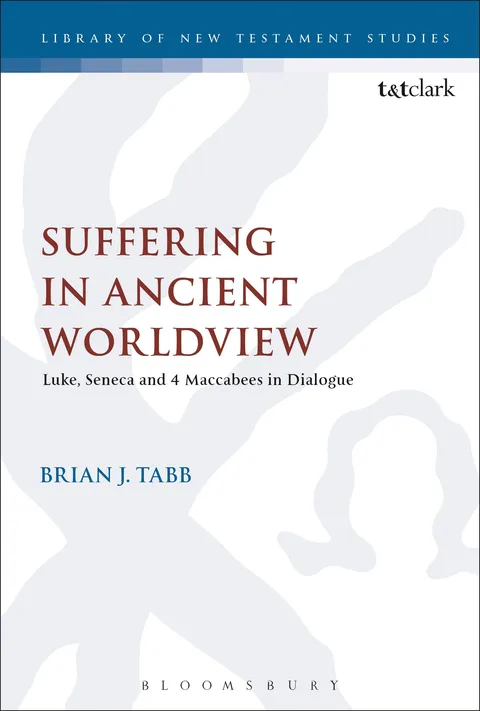
Suffering in Ancient Worldview investigates representative Christian, Roman Stoic and Jewish perspectives on the nature, problem and purpose of suffering. Tabb presents a close reading of Acts, Seneca's essays and letters and 4 Maccabees, highlighting how each author understands suffering vis-à-vis God, humanity, the world's problem and its solution, and the future. Tabb's study offers a pivotal definition for suffering in the 1st century and concludes by creatively situating these ancient authors in dialogue with each other.
Tabb shows that, despite their different religious and cultural positions, these ancient authors each expect and accept suffering as a present reality that is governed by divine providence, however defined. Luke, Seneca and the author of 4 Maccabees each affirm that suffering is not humanity's fundamental problem. Rather, suffering functions as a cipher for other things to be displayed. For Seneca, suffering provides an opportunity for one to learn and show virtue. The author of 4 Maccabees presents the nation's suffering as retribution for sin, while the martyrs' virtuous suffering leads to Israel's salvation. For Luke, the Lord Jesus suffers to accomplish salvation and restoration for the world marred by sin and suffering, and the suffering of his followers is instrumental for Christian mission.
Brian J. Tabb
Brian J. Tabb (Ph.D., London School of Theology) is academic dean and professor of biblical studies at Bethlehem College and Seminary and serves as general editor of Themelios.
More by Brian J. Tabb


Why Readwise Books?
Readwise Books is an ebook & audiobook platform that automatically logs how much you and your friends read, making it fun and easy to read more. Learn more →