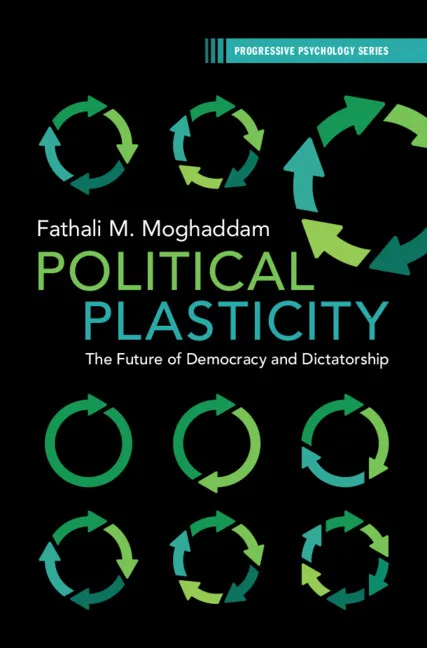
Political Plasticity
Report an issue
Tell us what's wrong and we'll take a look.
Thanks – we got it. We'll review and follow up if needed.
Political plasticity refers to limitations on how fast, how much, and in what ways political behavior does (or does not) change. In a number of important areas of behavior, such as leader-follower relations, ethnicity, religion, and the rich-poor divide, there has been long-term continuity of human behavior. These continuities are little impacted by factors assumed to bring about change such as electronic technologies, major wars, globalization, and revolutions. In addition to such areas of low political plasticity, areas of high political plasticity are considered. For example, women in education is discussed to illustrate how rapid societal change can be achieved. This book explains the psychological and social mechanisms that limit political plasticity, and shape the possibility of changes in both democratic and dictatorial countries. Students, teachers, and anyone interested in political behavior and social psychology will benefit from this volume.
Fathali M Moghaddam
Fathali M. Moghaddam is Professor of Psychology at Georgetown University and Editor of the Progressive Psychology book series published by Cambridge University Press. His most recent books include The Psychology of Multiculturalism, Assimilation and Omniculturalism (Springer, 2024) and The New Immigration Challenge (Cambridge, 2026).
More by Fathali M Moghaddam





Why Readwise Books?
Readwise Books is an ebook & audiobook platform that automatically logs how much you and your friends read, making it fun and easy to read more. Learn more →