Report an issue
Tell us what's wrong and we'll take a look.
Thanks – we got it. We'll review and follow up if needed.
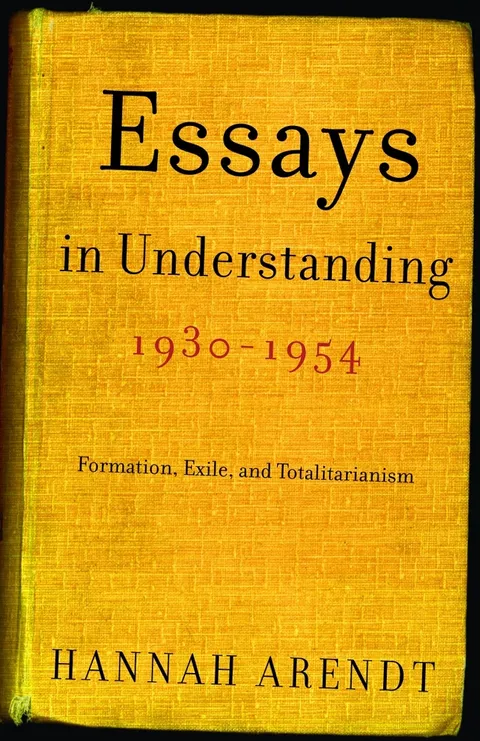
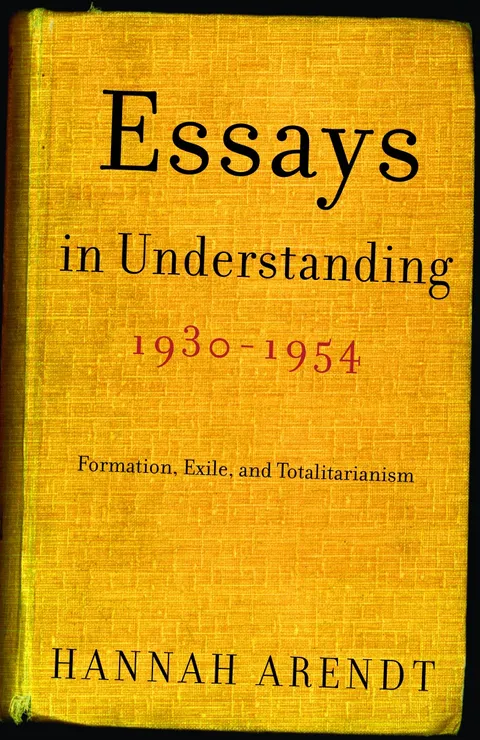
Few thinkers have addressed the political horrors and ethical complexities of the twentieth century with the insight and passionate intellectual integrity of Hannah Arendt. She was irresistible drawn to the activity of understanding, in an effort to endow historic, political, and cultural events with meaning. Essays in Understanding assembles many of Arendt’s writings from the 1930s, 1940s, and into the 1950s. Included here are illuminating discussions of St. Augustine, existentialism, Kafka, and Kierkegaard: relatively early examinations of Nazism, responsibility and guilt, and the place of religion in the modern world: and her later investigations into the nature of totalitarianism that Arendt set down after The Origins of Totalitarianism was published in 1951. The body of work gathered in this volume gives us a remarkable portrait of Arendt’s developments as a thinker—and confirms why her ideas and judgments remain as provocative and seminal today as they were when she first set them down.
Hannah Arendt
Hannah Arendt (1906–1975) is considered one of the most important and influential thinkers of the twentieth century. A political theorist and philosopher, she is also the author of Crises of the Republic, On Violence, The Life of the Mind, and Men in Dark Times. The Origins of Totalitarianism was first published in 1951.
More by Hannah Arendt



















Why Readwise Books?
Readwise Books is an ebook & audiobook platform that automatically logs how much you and your friends read, making it fun and easy to read more. Learn more →