Report an issue
Tell us what's wrong and we'll take a look.
Thanks – we got it. We'll review and follow up if needed.
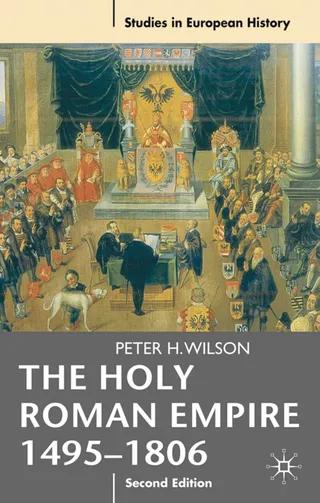
German history after the Reformation is often seen as a confusing period of political failures before the emergence of powerful states like Prussia give some coherence to the national story. The inability of Emperor Charles V to solve Germany's political and religious problems by 1558 seems to condemn the country to the chaos of the Thirty Years War and the subsequent partition of the Reich, or Holy Roman Empire, into virtually independent states until its final collapse in 1806.
Peter H. Wilson's major new study:
- Weaves insights from the latest research into a comprehensive account of German social, political and cultural development across two and a half centuries
- Addresses fundamental questions, such as how the apparently fragile structure of the Reich survived the trauma of the Thirty Years War and why, despite gross social inequality, Germany did not experience mass French-style revolution
- Provides a helpful glossary, detailed appendices and a guide to further reading to aid study
Peter H Wilson
Peter H. Wilson is Chichele Professor of the History of War at the University of Oxford. His books include The Thirty Years War: Europe's Tragedy and The Holy Roman Empire: A Thousand Years of Europe's History.
More by Peter H Wilson


Why Readwise Books?
Readwise Books is an ebook & audiobook platform that automatically logs how much you and your friends read, making it fun and easy to read more. Learn more →