Report an issue
Tell us what's wrong and we'll take a look.
Thanks – we got it. We'll review and follow up if needed.
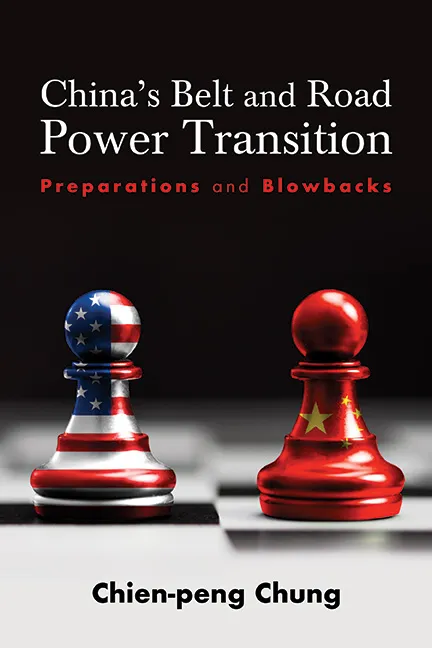
Details the Belt and Road global infrastructure development initiative as the most important instrument for China's leadership under Xi Jinping to create an alternative global economic and geopolitical order to challenge the United States.
In the opening decades of the twenty-first century the Chinese Communist Party (CCP) leadership under Xi Jinping has created a worldwide Sino-centric network, the Belt and Road Initiative (BRI), to challenge American dominance in world affairs. Encompassing economic, financial, political, and strategic relations, the CCP's belief is that the funds, construction projects, and promises offered by the BRI will generate a widespread perception of the inexorability, legitimacy, and thus acceptability of a Chinese world order. Consisting initially of a land-based "Silk Road Economic Belt," an oceangoing "Maritime Silk Road," and the China-Pakistan Economic Corridor, the BRI has expanded to involve more than 140 countries and includes a Health Silk Road, Digital Silk Road, and Polar Silk Road, but it has also experienced serious challenges. Using power transition theory, Chien-peng Chung carefully investigates and evaluates the enterprise's benefits and shortcomings, concluding that it is still too early to consider the BRI a success.
Chien-peng (C. P.) Chung
Chien-peng Chung is Professor of Political Science at Lingnan University, Hong Kong.


Why Readwise Books?
Readwise Books is an ebook & audiobook platform that automatically logs how much you and your friends read, making it fun and easy to read more. Learn more →