Report an issue
Tell us what's wrong and we'll take a look.
Thanks – we got it. We'll review and follow up if needed.
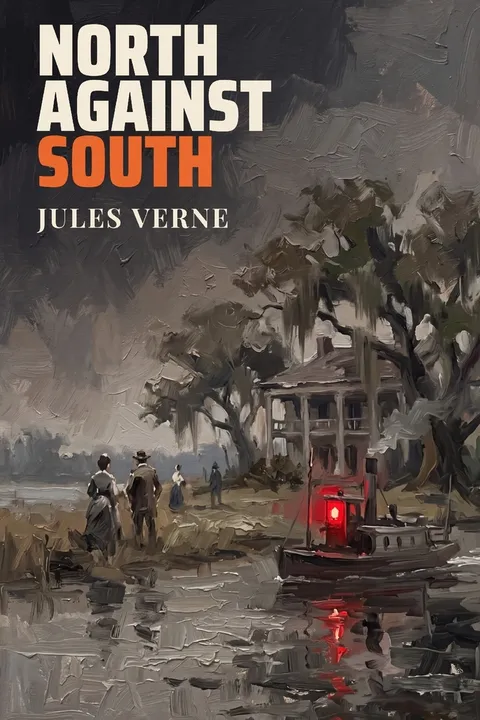
A Florida plantation owner who opposes slavery. A ruthless Confederate who wants him destroyed. And a nation tearing itself apart.
James Burbank owns Camdless-Bay plantation in Civil War Florida, but unlike his neighbors, he opposes slavery and supports the Union despite living in Confederate territory. His principled stance makes him a target for Texar, a villainous Confederate supporter whose hatred and greed drive him to persecute Burbank's family through the war's chaos.
As the conflict between North and South rages, Burbank must protect his family from Texar's schemes while remaining true to his convictions in hostile territory. The personal vendetta between these two men becomes a microcosm of the broader national divide.
Jules Verne wrote North Against South in 1887 with genuine anti-slavery convictions-he condemned the institution unequivocally and celebrated Union victory as triumph of justice. Yet his good intentions cannot overcome fundamental limitations: he never visited the American South, worked entirely from European sources, and produced characterization so thin that complex historical actors become melodramatic types. Burbank is entirely noble, Texar is entirely evil, and African American characters exist primarily as objects of white benevolence rather than as subjects with agency.
The novel demonstrates how even progressive political positions don't automatically translate into sophisticated literature. Verne's opposition to slavery is clear, but his understanding of how it functioned, how the Civil War unfolded, and how African Americans experienced both institution and conflict remains superficial. He reduces complex historical tragedy to conventional adventure melodrama.
Modern readers will find the treatment of race deeply problematic despite anti-slavery stance-the paternalism that assumes white guidance is necessary, the denial of African American agency and complex subjectivity, the failure to engage genuinely with enslaved people's perspectives.
From the author of Twenty Thousand Leagues Under the Sea-well-intentioned but deeply flawed engagement with American slavery and Civil War.
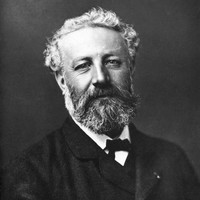
Jules Verne
Jules Verne (1828-1905) is considered by many the father of science fiction. Born in Nantes, France, he studied law but turned to writing opera libretti until the 1863 publication of Five Weeks in a Balloon, the first of his Extraordinary Voyages series. Its success encouraged him to produce a number of classic and prophetic science fiction novels, including Journey to the Center of the Earth and Twenty Thousand Leagues under the Sea. His stories foresaw many scientific and technological developments, including the submarine, television, and space travel.
More by Jules Verne




Why Readwise Books?
Readwise Books is an ebook & audiobook platform that automatically logs how much you and your friends read, making it fun and easy to read more. Learn more →