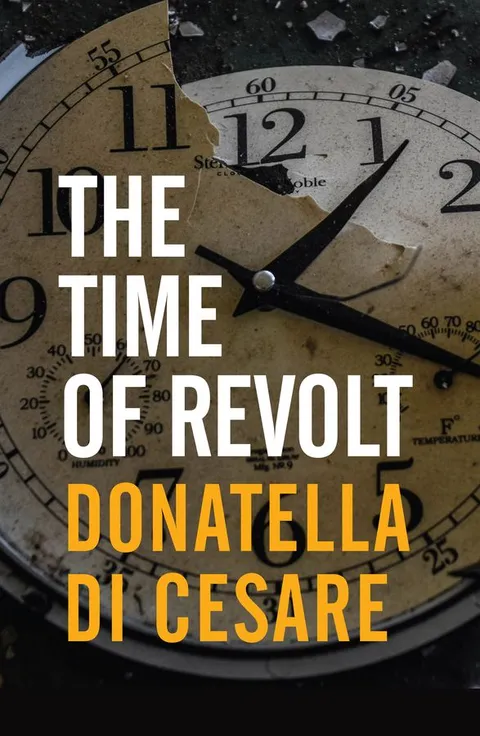
The Time of Revolt
Report an issue
Tell us what's wrong and we'll take a look.
Thanks – we got it. We'll review and follow up if needed.
As capitalism triumphs on the ruins of utopias and faith in progress fades, revolts are breaking out everywhere. From London to Hong Kong and from Buenos Aires to Beirut, protests flare up, in some cases spreading like wildfire, in other cases petering out and reigniting elsewhere. Not even the pandemic has been able to stop them: as many were reflecting on the loss of public space, the fuse of a fresh explosion was lit in Minneapolis with the brutal murder of George Floyd. We are living in an age of revolt.
But what is revolt? It would be a mistake to think of it as simply an explosion of anger, a spontaneous and irrational outburst, as it is often portrayed in the media. Exploding anger is not a bolt from the blue but a symptom of a social order in which the sovereignty of the state has imposed itself as the sole condition of order. Revolt challenges the sovereignty of the state, whether it is democratic or despotic, exposing the violence that underpins it. Revolt upsets the agenda of power, interrupts time, throws history into disarray. The time of revolt, discontinuous and intermittent, is also a revolt of time, an anarchic transition to a space of time that disengages itself from the architecture of politics.
This brilliant reflection on the nature and significance of revolt will be of interest to students of politics and philosophy and to anyone concerned with the key questions of politics today.




David Broder
Translated by
David Broder is a Rome-based writer and translator. He is a contributing editor for Jacobin magazine and regularly writes on Italian politics for publications including Internazionale.


Why Readwise Books?
Readwise Books is an ebook & audiobook platform that automatically logs how much you and your friends read, making it fun and easy to read more. Learn more →