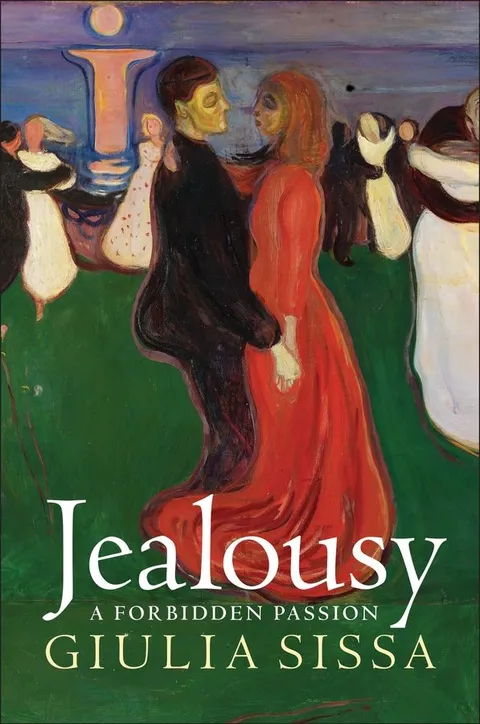
Jealousy: A Forbidden Passion
Report an issue
Tell us what's wrong and we'll take a look.
Thanks – we got it. We'll review and follow up if needed.
Amorous jealousy is not a monster, as Shakespeare's venomous Iago claims. It is neither prickly and bitter fancy nor a cruel and mean passion, nor yet a symptom of feeble self-esteem. All those who have experienced its wounds are well aware that it is not callous, nasty, delusional and ridiculous. It is just painful.
Yet for centuries moralists have poured scorn and contempt on a feeling that, in their view, we should fight in every possible way. It is allegedly a disease to be treated, a moral vice to be eradicated, an ugly, pre-modern, illiberal, proprietary emotion to be overcome. Above all, no one should ever admit to being jealous.
So should we silence this embarrassing sentiment? Or should we, like the heroines of Greek tragedy, see it as a fundamental human demand for reciprocity in love? By examining its cultural history from the ancient Greeks to La Rochefoucauld, Hobbes, Kant, Stendhal, Freud, Beauvoir, Sartre and Lacan, this book demonstrates how jealousy, far from being a 'green-eyed' fiend, reveals the intense and apprehensive nature of all erotic love, which is the desire to be desired.
We should never be ashamed to love.
Giulia Sissa
Giulia Sissa holds a joint appointment in Political Science and Classics at the University of California Los Angeles. She is the author of numerous books and articles on the history, anthropology and philosophy of the ancient world, including: Greek Virginity (Boston, Harvard UP, 1990); Sex and Sensuality in the Ancient World (Yale UP, 2008) and La Jalousie. Une passion inavouable (Paris, Odile Jacob, 2015). Sissa is currently working on the quest for the best government, from Athens to Utopia.
More by Giulia Sissa


Why Readwise Books?
Readwise Books is an ebook & audiobook platform that automatically logs how much you and your friends read, making it fun and easy to read more. Learn more →