Report an issue
Tell us what's wrong and we'll take a look.
Thanks – we got it. We'll review and follow up if needed.
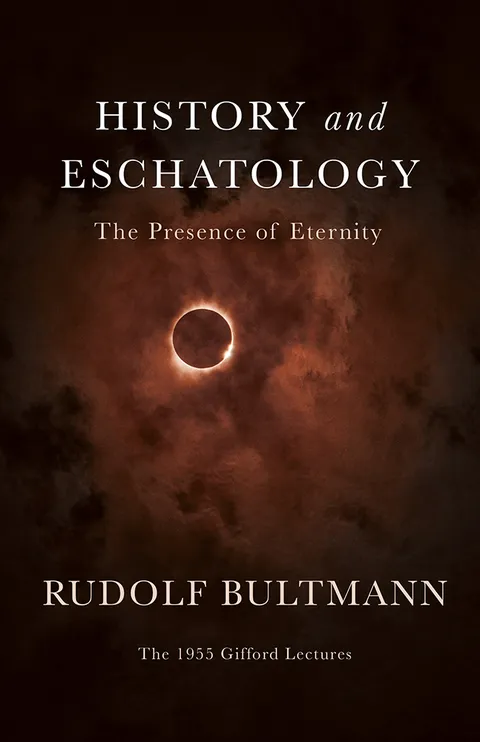
Bultmann was no mere historian, technical critic, or New Testament theologian. Bultmann's genius--and some think his Achilles heel--resides in his strategic use of existential philosophy as a means of interpreting the significance of Christianity. In History and Eschatology, first presented as the 1955 Gifford Lectures, Bultmann steps back to address larger philosophical questions about the relationship between history and the Christian future and then expands to consider how meaning exists within history.
Bultmann begins with a discussion of ancient cyclical understandings of history before exploring the fundamental eschatological shift in historical understanding. Bultmann credits the Judeo-Christian tradition with reconceptualizing history as linear with a clear end, culminating in the second coming of Christ. But, as Bultmann argues, this new understanding of history was not without its own problems. The early church's profound disappointment in Christ's failure to return forced a Christian reinterpretation of history--a teleological one--that flourished in the Renaissance and eventuated, surprisingly, in Marxism. According to Bultmann, this teleology neglects the individual's participation in the Christ event.
In the end, Bultmann draws on Paul and John to challenge this purely teleological approach and ground a Christian understanding of history and eschatology in the historical event of Christ that is both timeless and immediately present. Only through this Christ event, both in the past and future, does life find eternal meaning.



Why Readwise Books?
Readwise Books is an ebook & audiobook platform that automatically logs how much you and your friends read, making it fun and easy to read more. Learn more →