Love One Another, My Friends
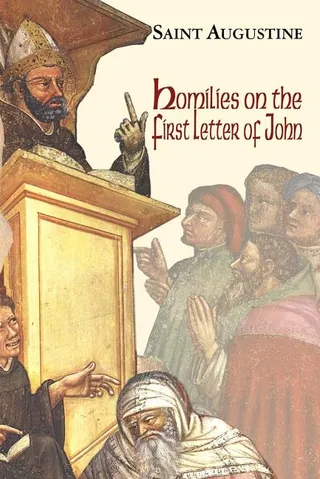
St. Augustine's Homilies on the First Letter of John
Report an issue
Tell us what's wrong and we'll take a look.
Thanks – we got it. We'll review and follow up if needed.
Augustine's interpretation is spiritual--his were not scholarly or academic concerns--and John Leinenweber's translation is fresh and accessible, capturing the clarity, brilliance, and inspired passion of the original. John has said many things, stated Augustine, and almost all of them concern love. The first six of the ten homilies were delivered on the days of the Easter octave. This period proved too short for Augustine to cover the whole of the letter, and he preached four additional homilies later in the spring. In his Confessions, Augustine spoke of his great longing as a youth to love and be loved--a topic that appealed greatly to his listeners. During the course of delivering these homilies, he was interrupted time and again by applause and shouts of enthusiasm. The ten homilies are broken up into twenty-four short chapters, for example: The Commandment of Love, Two Loves (of God and of the World), Christ and Antichrists, Unanswered Prayer, God is Love, God Has Loved Us First, Love Casts Out Fear. His are in large part moral teachings, dealing with such topics as prayer, our enemies, fear of God, the church, the world (so important in Saint John's writings). What does one actually do to love God and others? What are the pitfalls of loving? How can one learn to love more? Throughout the homilies, Augustine's great desire to love and be loved and to live eternally with God are eloquently expressed. Believing himself ignorant of Scripture, he had initially considered himself ill-prepared for the priesthood. Augustine's subsequent tireless studies unleashed a stream of biblical commentaries that led him to be ranked with Thomas Aquinas as one of the greatest teachers the Western Church has ever produced, and one of its greatest Fathers. His towering intellect molded the thought of Western Christianity, and his ideas dominated the thinking of the Western world for a thousand years after his death. Augustine wrote profusely, explaining and defending the faith. Called Doctor of Grace, his best known works are his Confessions, one of the greatest spiritual classics of all time, and City of God, an exposition of a Christian philosophy of history.
Augustine of Hippo
Augustine of Hippo (354-430) was a theologian and philosopher whose writing changed the course of medieval thought. Known as one of the theological fathers of the Protestant Reformation, his teachings on subjects like salvation, divine grace, and free will have earned him the recognition of sainthood in the Catholic Church, the Eastern Orthodox Church, the Lutheran churches, and the Anglican Communion. Augustine is also known in various places around the world as the patron saint of brewers, printers, and theologians.
More by Augustine of Hippo


Why Readwise Books?
Readwise Books is an ebook & audiobook platform that automatically logs how much you and your friends read, making it fun and easy to read more. Learn more →