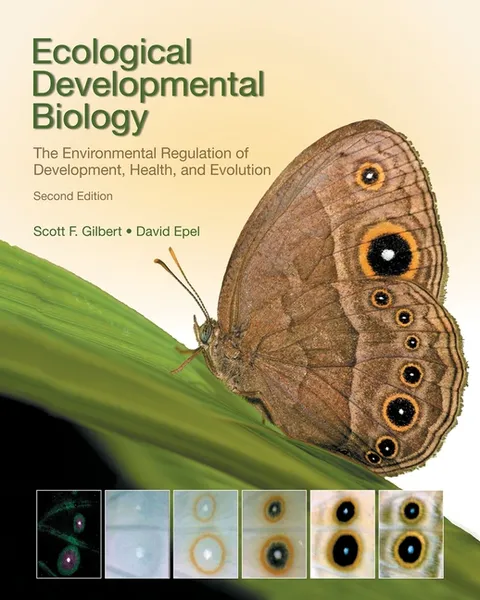
Ecological Developmental Biology
The Environmental Regulation of Development, Health, and Evolution
Report an issue
Tell us what's wrong and we'll take a look.
Thanks – we got it. We'll review and follow up if needed.
- details the three main epigenetic sources of phenotype: symbionts, altered chromatin structure, and plasticity.
- discusses the various ways that development can be disrupted: teratogens, endocrine disruptors, global climate change, and mismatches between diet and environment.
- documents the evidence for an extended evolutionary synthesis involving the modern synthesis, evo-devo, and eco-evo-devo.
The revolution in molecular technologies has created a revolution in our perception of the living world. It is life, but not as we knew it.
* Symbiosis, once thought the exception to the rules of life, is now recognized as a signature of life, including its development and evolution. We function, develop, and possibly evolve as consortia.
* Developmental plasticity has transformed our ways of relating the genome to both the organism and its environment, showing that the environment can instruct, as well as select, phenotypes.
* Environmentally induced modifications of the genome (epialleles) can be created by ecological agents and inherited for many generations, showing the ability of environmental agents to generate selectable variation.
* Disease susceptibilities--especially to diseases such as cancer, diabetes, asthma, autism, and obesity--may be inherited through epialleles caused by environmental agents, by mismatches in developmental plasticity, or by particular combinations of symbionts.
* Global climate change and endocrine disruptors are affecting how organisms develop and how they behave.
The science studying this new world, uncovering the relationships between genes, developing organisms, and their environments, is called ecological developmental biology. This book presents the data for ecological developmental biology, integrating it into new accounts of medicine, evolution, and embryology.
The new evolutionary science created by this approach to nature is called ecological evolutionary developmental biology (eco-evo-devo). The book documents the evidence for a new, extended, evolutionary synthesis, a synthesis that: confounds the creationist belief that evolution can't be described above the species-level; integrates aging and "Western" diseases such as diabetes, atherosclerosis, cancer, and obesity into an evolutionary context; and sees interspecies interactions both within the organism and between organisms as being critical for evolution, development, and fitness.
For Instructors
Instructor's Resource Library
This resource includes all figures (line-art illustrations and photographs) and tables from the textbook, provided as both high- and low-resolution JPEGs. All have been formatted and optimized for excellent projection quality. Also included are ready-to-use PowerPoint presentations of all figures and tables.
Scott F Gilbert
Richard Scott is Professor of Orthopaedic Surgery, Emeritus, Harvard Medical School. Dr Scott has a wealth of experience in teaching and performing TKA. He brings many years of experience from Harvard Brigham and Womens Hospital and Private Practice in Boston MA. He is author of our successful TKA title now in its third edition
More by Scott F Gilbert


Why Readwise Books?
Readwise Books is an ebook & audiobook platform that automatically logs how much you and your friends read, making it fun and easy to read more. Learn more →