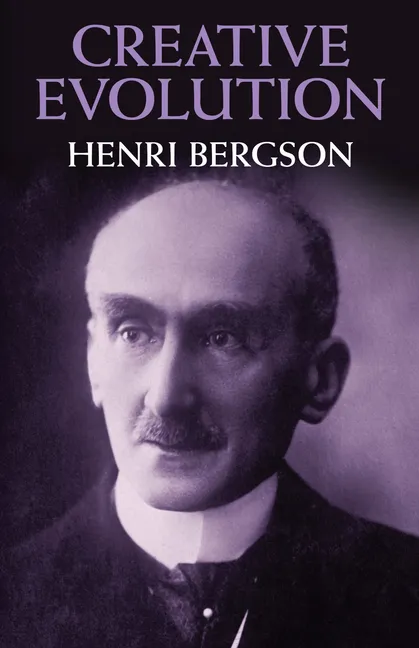
Creative Evolution
Report an issue
Tell us what's wrong and we'll take a look.
Thanks – we got it. We'll review and follow up if needed.
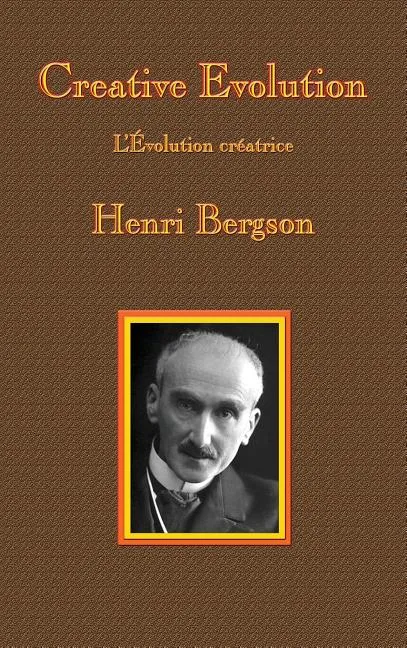
The most famous and influential work of distinguished French philosopher Henri Bergson (1859-1941), Creative Evolution features the fullest expression of the philosopher's ideas about the problem of existence, propounding a theory of evolution completely distinct from these of earlier thinkers and scientists.
In discussing the meaning of life, Bergson considers the order of nature and the form of intelligence, including the geometrical tendency of the intellect, and examines mechanisms of thought and illusion. In addition, he presents a critique of the idea of immutability and the concept of nothingness, from Plato and Aristotle through the evolutionism of his contemporaries.
Bergson's influence on Marcel Proust and other twentieth-century writers renders a grasp of his theories imperative to students of literature as well as philosophy. Historians of science and other readers will also appreciate the importance of this milestone in philosophical and evolutionary thought.
Henri Bergson
Henri-Louis Bergson (18 October 1859–4 January 1941) was a French philosopher influential in the first half of the 20th century. He believed that for a true understanding of reality the processes of immediate experience combined with intuition play a larger role than rationalism and science. In 1927 he received the Nobel Prize in Literature “in recognition of his rich and vitalizing ideas and the brilliant skill with which they have been presented”. In 1930, he received France’s highest honor: the Grand-Croix de la Legion d’honneur.
More by Henri Bergson





Why Readwise Books?
Readwise Books is an ebook & audiobook platform that automatically logs how much you and your friends read, making it fun and easy to read more. Learn more →