Report an issue
Tell us what's wrong and we'll take a look.
Thanks – we got it. We'll review and follow up if needed.
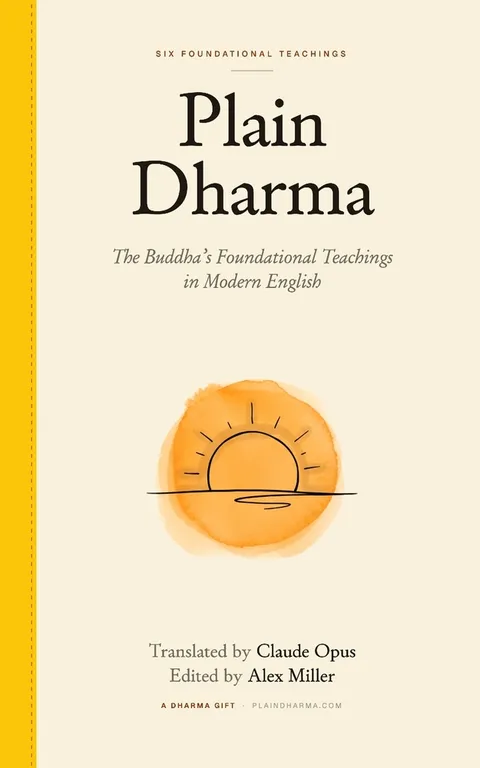
Six of the Buddha's foundational teachings, rendered in plain modern English - clear enough to read in an afternoon, faithful enough to take seriously.
This is not a scholarly translation bristling with Pali and footnotes. It is a plain reading: the same teachings working scholars have translated for decades, set down in everyday language so a first-time reader can actually follow them - without watering down the substance.
Inside:
1. The Buddha's First Talk (Dhammacakkappavattana) - the middle path, the four noble truths, and the eightfold way to live.
2. The Buddha's Second Talk: Not-Self (Anattalakkhana) - why the body, feelings, perceptions, and even awareness aren't you.
3. The Fire Sermon (Adittapariyaya) - everything is on fire; what is burning, and how to cool down.
4. On Loving-Kindness (Metta) - hold the wish that every living thing, without exception, be at ease.
5. The Foundations of Mindfulness (Satipatthana) - watch the body, feelings, mind, and experience clearly.
6. How to Decide What to Believe (Kalama) - don't take anything on authority; test it for yourself.
Each teaching opens with a one-line distillation and a simple illustration, and the book closes with a Sources & Further Reading appendix pointing to the rigorous scholarly translations (SuttaCentral, Access to Insight, Bhikkhu Bodhi) behind every plain-English rendering.
Released into the public domain under CC0 1.0. Copy it, print it, translate it, give it away - no permission needed, no attribution required, in keeping with the Buddhist tradition of free dharma distribution. Every format lives free at plaindharma.com.
A note on how it was made: the plain-English rendering was drafted with AI from the original Pāli, then refined by hand - argued out line by line, word by word, against the 2,600-year-old text. The full story is at plaindharma.com/how-it-was-made.
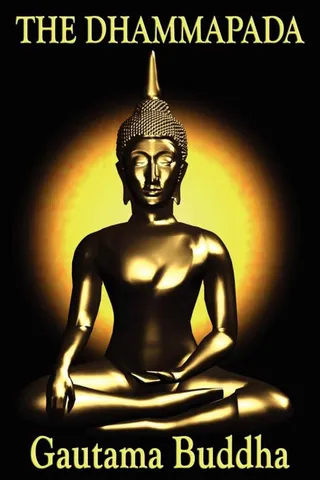
Gautama Buddha
Gautama Buddha, born as Prince Siddhārtha, was a spiritual teacher from the Indian subcontinent, on whose teachings Buddhism was founded. Gautama is the primary figure in Buddhism, and accounts of his life, discourses, and monastic rules are believed by Buddhists to have been summarized after his death and memorized by his followers. Various collections of teachings attributed to him were passed down by oral tradition, and first committed to writing about 400 years later. The time of Gautama's birth and death is uncertain: most historians in the early 20th century dated his lifetime as circa 563 BCE to 483 BCE, but more recent opinion dates his death to between 486 and 483 BCE or, according to some, between 411 and 400 BCE. However, at a specialist symposium on this question held in 1988 in Göttingen, the majority of those scholars who presented definite opinions gave dates within 20 years either side of 400 BCE for the Buddha's death, with others supporting earlier or later dates. These alternative chronologies, however, have not yet been accepted by all other historians.
More by Gautama Buddha








Why Readwise Books?
Readwise Books is an ebook & audiobook platform that automatically logs how much you and your friends read, making it fun and easy to read more. Learn more →