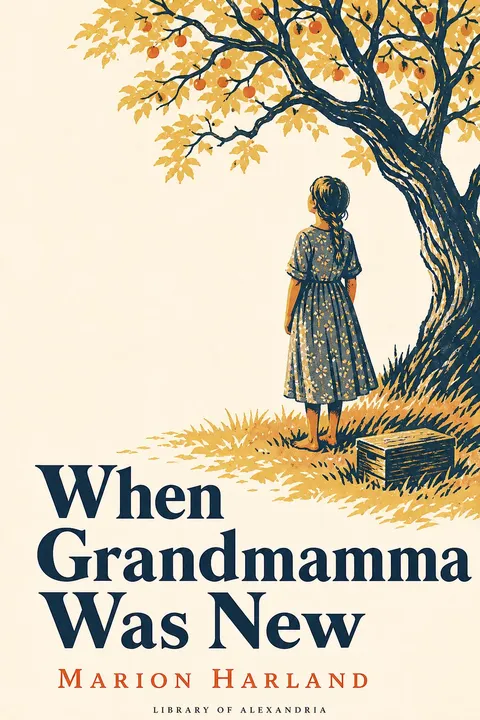
When Grandmamma Was New
Southern Coming-of-Age Fiction About Virginia Girlhood and the Lessons of Family
Report an issue
Tell us what's wrong and we'll take a look.
Thanks – we got it. We'll review and follow up if needed.
Molly Burwell is no model child-and her misadventures make her worth knowing. In the Virginia countryside, a restless girl's mistakes become lasting lessons in love, courage, and forgiveness.
Marion Harland's When Grandmamma Was New follows Molly through the small triumphs and enormous troubles of growing up. Beside her well-behaved cousin Mary 'Liza, Molly feels conspicuously unruly: she hides unwanted books beneath loose bricks, holds solemn funerals for beloved pets, and races barefoot through broom-straw fields. Her cherished Cousin Molly Belle offers companionship as jealousy, affection, and a developing conscience pull Molly in different directions.
Told through linked episodes, the story combines a child's immediate feelings with the reflective perspective of remembered youth. A ruined doll, a treasured rag-baby, and a dangerous nighttime errand give ordinary childhood emotions real consequences. Country houses, orchards, and family gatherings establish its antebellum Southern setting; enslaved household members are also part of that world, placing its domestic warmth within an unequal social order. The result offers both an engaging portrait of girlhood and an opportunity to consider how memory preserves the assumptions of its time.
What readers find inside:
- A headstrong heroine - Molly's curiosity and temper lead her into trouble that tests her growing sense of responsibility.
- Cousins and confidantes - Mary 'Liza and Molly Belle illuminate the comparisons and attachments that shape Molly's childhood.
- Play with serious stakes - Dolls, pets, and elaborate ceremonies reveal the intensity of a child's loves and losses.
- Unexpected courage - A nighttime journey to gather herbs for a snakebite victim challenges Molly's fears.
- A remembered Virginia - Rural landscapes and household customs evoke a childhood rooted in the antebellum South.
This book will appeal to readers of American regional classics, family-centered coming-of-age stories, and fiction that explores childhood through adult memory.
Step into Molly's world and follow the mischief, affection, and hard-earned understanding of her Virginia girlhood.
Marion Harland
Mary Virginia Terhune, better known by the pen name Marion Harland, was a prolific and bestselling American author of both fiction and nonfiction. Born in Amelia County, Virginia, she began writing essays at the age of 14 under numerous pen names until 1853, when she settled on Marion Harland. Her debut novel, Alone, was published in 1854 and became a "emphatic success" with a second printing the following year. She was a prolific writer of best-selling women's novels, known as "plantation fiction" at the time, as well as countless serial works, short stories, and magazine essays for fifteen years. Terhune married Presbyterian preacher Edward Payson Terhune in 1856, and they moved to Newark, New Jersey, where she spent the rest of her adult life. They had six children together; three of them died as babies. In the 1870s, shortly after the birth of her last son, Albert Payson, she released Common Sense in the Household: A Manual of Practical Housewifery, a cookbook and household guide for housewives that became a tremendous bestseller, selling more than one million copies over multiple editions.
More by Marion Harland







Why Readwise Books?
Readwise Books is an ebook & audiobook platform that automatically logs how much you and your friends read, making it fun and easy to read more. Learn more →