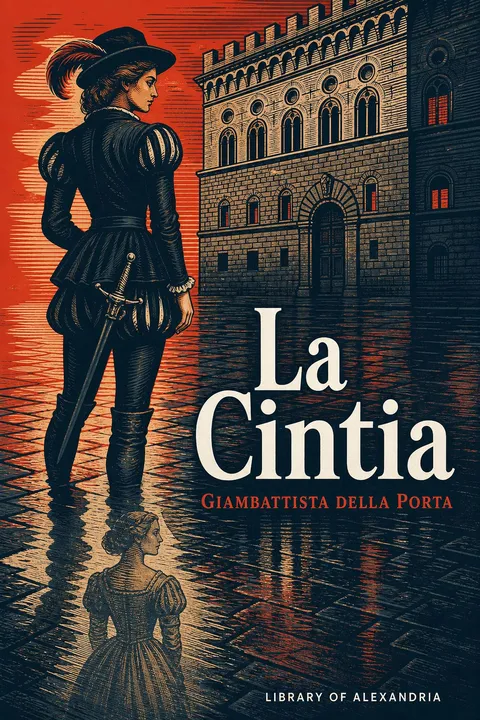
La Cintia
Italian Renaissance Comedy of Disguise, Desire, and Dangerous Secrets
Report an issue
Tell us what's wrong and we'll take a look.
Thanks – we got it. We'll review and follow up if needed.
She has learned to live as the perfect gentleman. Falling in love may expose everything.
In Renaissance Naples, Cintia has grown up as Cintio, the son her mother's lover wanted. Educated in letters, horsemanship, and swordsmanship, she moves among noble young men while concealing the truth of her identity. But her love for her closest friend, Erasto, makes that carefully maintained life increasingly difficult to sustain.
Giambattista della Porta's La Cintia builds its comedy around desires that cross and secrets that multiply. Erasto loves Amasio, a young man disguised as a woman for family safety; Erasto's sister Lidia loves the person she knows as Cintio. A boastful Captain and two anxious fathers add to the confusion. Amid the banter and nocturnal misunderstandings, Cintia faces a painful choice between concealment and revelation. The play's appeal lies not only in its theatrical complications but in the emotional stakes beneath them: the fear of rejection, the pressure of family expectations, and the longing to be loved as oneself.
What readers find inside:
- A double disguise - Cintia and Amasio live behind identities shaped by family necessity.
- Entangled desire - The affections of Cintia, Erasto, and Lidia turn mistaken identity into an intimate dilemma.
- Comic bravado - A swaggering Captain supplies a pointed contrast to the lovers' uncertainty.
- A revealing confession - Cintia's conversation with her old nurse Mitieto brings her hidden feelings into the open.
- Laughter and distress - Witty exchanges and farcical encounters sit beside moments of genuine despair.
For readers of Italian Renaissance drama, lovers of mistaken-identity comedy, and anyone interested in the history of gender onstage, this play offers both theatrical ingenuity and a heroine with much to lose.
Enter a Naples of concealed identities and discover how far Cintia will go for love.




Why Readwise Books?
Readwise Books is an ebook & audiobook platform that automatically logs how much you and your friends read, making it fun and easy to read more. Learn more →