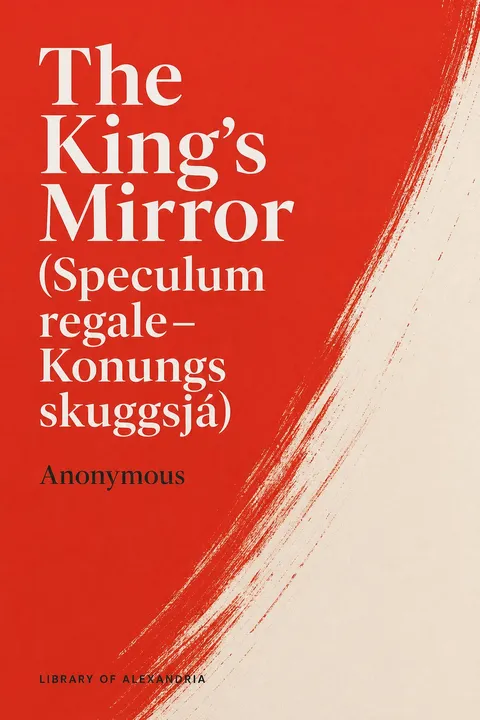
The King's Mirror (Speculum regale- Konungs skuggsjá)
Medieval Norse Wisdom on Leadership, Justice, and the Discipline of Power
Report an issue
Tell us what's wrong and we'll take a look.
Thanks – we got it. We'll review and follow up if needed.
What must a ruler learn before he can rule well? In medieval Norway, the answer began with disciplined judgment, moral responsibility, and a wide knowledge of the world.
Written around 1250 by an anonymous Norwegian author, The King's Mirror belongs to the tradition of counsel for rulers known as mirrors for princes. Its teaching takes the form of a conversation between a father and his son, moving from the practical demands of a merchant's life to conduct at court and the responsibilities of kingship. Advice about speech, learning, and self-command sits alongside reflections on justice, Christian duty, and the proper use of authority.
The work's curiosity reaches well beyond the royal household. Trade, seafaring, and the natural world form part of its broad account of what an informed person should understand. These subjects make it both a work of political thought and a revealing record of medieval Norwegian intellectual life. For readers today, its lasting interest lies in the connections it draws between personal character and public responsibility: power is never treated as separate from the judgment of the person who holds it.
What readers find inside:
- A father's counsel - A sustained dialogue makes instruction a process of questioning, explanation, and reflection.
- Royal responsibility - Kingship is examined through the demands of justice, restraint, and moral judgment.
- Life at court - Guidance on conduct and speech reveals the expectations surrounding service and authority.
- Merchants and mariners - Practical concerns of trade and travel broaden the work beyond advice for rulers.
- A medieval worldview - Christian belief, ethical teaching, and curiosity about nature shape the father's account of the world.
For readers of medieval history, students of political philosophy, and anyone interested in the ethics of leadership, this dialogue offers a distinctive northern European perspective on the obligations of power.
Enter the conversation and consider what wisdom asks of those who lead.









Why Readwise Books?
Readwise Books is an ebook & audiobook platform that automatically logs how much you and your friends read, making it fun and easy to read more. Learn more →