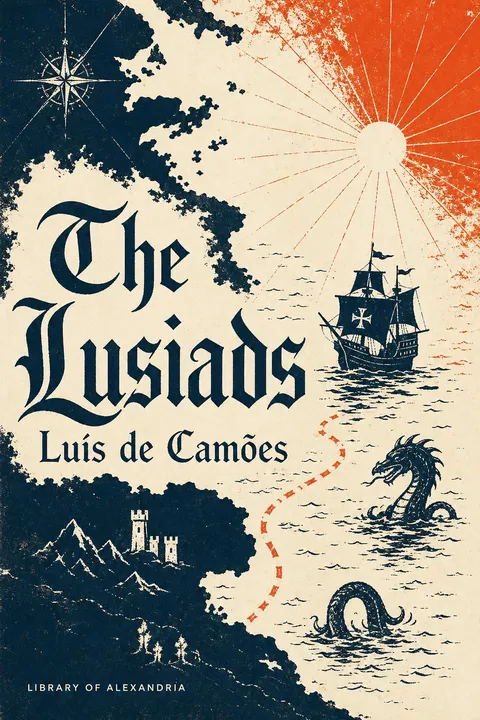
The Lusiads
Epic Poetry of Portuguese Exploration, Where Seafarers Face Gods and Fate
Report an issue
Tell us what's wrong and we'll take a look.
Thanks – we got it. We'll review and follow up if needed.
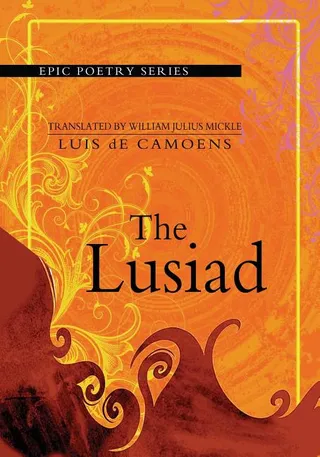
A fleet sails toward India, but its course is contested by the gods. Portugal's national epic turns a historic voyage into a drama of courage, ambition, and fate.
Written in the sixteenth century, Luís de Camões's The Lusiads follows Vasco da Gama's expedition around Africa to India. The journey provides the frame for a much larger vision of Portugal's past and its place in the world. Seafaring trials unfold alongside accounts of kings, battles, and acts of daring, while the gods of classical mythology take sides in human affairs.
Drawing on the epic traditions of Homer and Virgil, Camões brings Renaissance learning to the experience of oceanic exploration. Venus champions the Portuguese, Bacchus opposes them, and the voyage moves between physical danger and supernatural encounter. The towering figure of Adamastor gives the terrors of the sea a memorable voice, while the Island of Love brings desire and reward into the poem's vision of heroic achievement. Its lasting appeal lies not only in its scale, but in the tension between public glory and the human costs of seeking it.
What readers find inside:
- A historic voyage - Vasco da Gama's passage to India anchors a sweeping poem of maritime adventure.
- Gods in conflict - Classical deities intervene in the fortunes of sailors far from home.
- Portugal's past - Episodes of national history connect the expedition to generations of struggle and ambition.
- Mythic encounters - Adamastor and the Island of Love transform the voyage into an imaginative journey beyond ordinary geography.
- The price of glory - Reflections on danger, desire, and renown complicate the celebration of heroic deeds.
For readers of classical epic, lovers of maritime literature, and anyone curious about Renaissance Portugal, this poem offers a meeting of history and myth on an oceanic scale.
Set sail with Camões into a world where human resolve meets the power of the sea and the will of the gods.



Why Readwise Books?
Readwise Books is an ebook & audiobook platform that automatically logs how much you and your friends read, making it fun and easy to read more. Learn more →