Report an issue
Tell us what's wrong and we'll take a look.
Thanks – we got it. We'll review and follow up if needed.
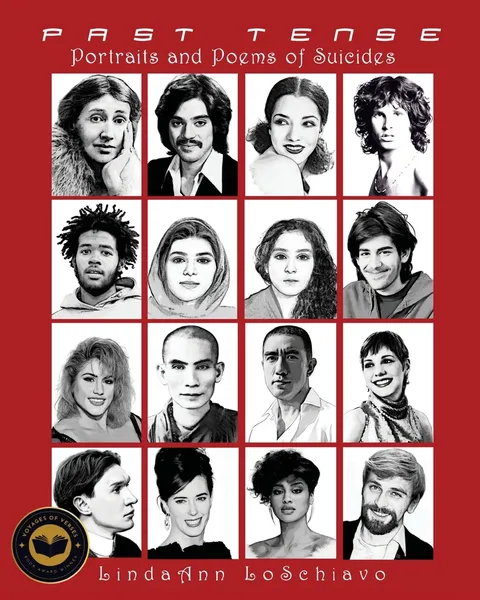
An obituary ends the story. These poems refuse to.
Past Tense: Portraits and Poems on Suicides gathers twenty-three lives, spanning more than a century, from 1902 to 2022 - some world-famous, some known only to the few who loved them. Virginia Woolf, Kate Spade, Aaron Swartz, Jim Morrison, and Diane Arbus appear alongside figures far less documented: two Saudi refugees afraid to return home, a physician who preyed on his patients, a hacktivist facing decades in prison, the poet's cousin.
Each poem is written in a form chosen to match its subject - not decoration, but architecture. A cento built from Vachel Lindsay's own lines. An erasure that lets Virginia Woolf's farewell letter point toward a second, hidden meaning. A poem composed in computer code for a programmer. A dynamic range of forms - arrow-shot elixirs in words - explores the shock of suicide and reflects the elusive nature of mental illness, sometimes by borrowing confessions from the very lives the collection honors.
Most poems step inside the final moment itself, holding distance at bay, resisting summary. A handful do something else instead - they hold their subjects to account rather than mourning them, unwilling to let judgment stay silent. The collection does not ask readers to grieve uniformly. Some of these deaths were tragedies. Some were the last act of someone who had already caused irreparable harm to others. Past Tense holds both truths without flattening either one.
The book resists tidy categories on purpose. Some subjects took their own lives in despair; one, a Buddhist monk, in protest. Some left notes that are now part of the public record; others left almost nothing behind at all. The poems do not explain why. They inhabit the moment closest to the unknowable, and let form do what argument cannot.
Written across a wide range of poetic structures - several rarely seen together in a single collection - Past Tense is as much a demonstration of what poetic form can hold as it is a meditation on memory, judgment, and the stories we tell after someone is gone.
A discussion guide is available for book clubs, classrooms, and reading groups exploring the collection's historical range and its questions about how - and whether - we get to judge the dead.
LindaAnn LoSchiavo
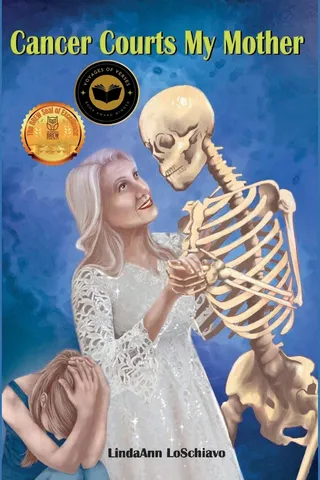
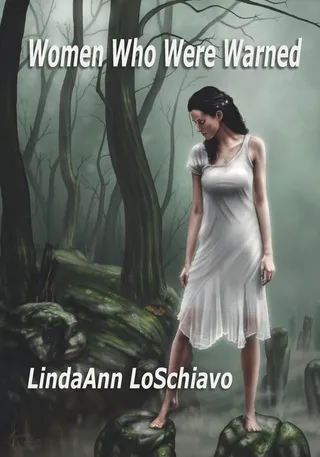
Native New Yorker and award-winner, LindaAnn LoSchiavo is a member of British Fantasy Society, HWA, SFPA, and The Dramatists Guild.Through the lens of horror, LoSchiavo has reimagined social justice in two Hallowe'en poetry collections, has transformed Cancer into a Terminator-Casanova in "Cancer Courts My Mother" [Prolific Pulse Press, 2025], and has blended pop culture, dark humor, and horror to create a fresh perspective on the undead in "Vampire Verses: Poems" [Twisted Dreams Press, 2025]. In addition to the chapbooks cited above, her shorter collections include: "Conflicted Excitement" [Red Wolf Editions, 2018], "Concupiscent Consumption" [Red Ferret Press, 2020], "Women Who Were Warned" [Cerasus Press, 2022], "Messengers of the Macabre: Hallowe'en Poems" [Audience Askew Press, 2022, and co-written with David Davies], "Vampire Ventures" [Alien Buddha Press, 2023], "Always Haunted: Hallowe'en Poems" [Wild Ink Publishing, 2024], and "Felones de Se: Poems about Suicide" [Ukiyoto Publishing, 2024]. Her full-length collections include: "A Route Obscure and Lonely" [Wapshott Press, 2019] and "Apprenticed to the Night" [UniVerse Press, 2024].
More by LindaAnn LoSchiavo


Why Readwise Books?
Readwise Books is an ebook & audiobook platform that automatically logs how much you and your friends read, making it fun and easy to read more. Learn more →