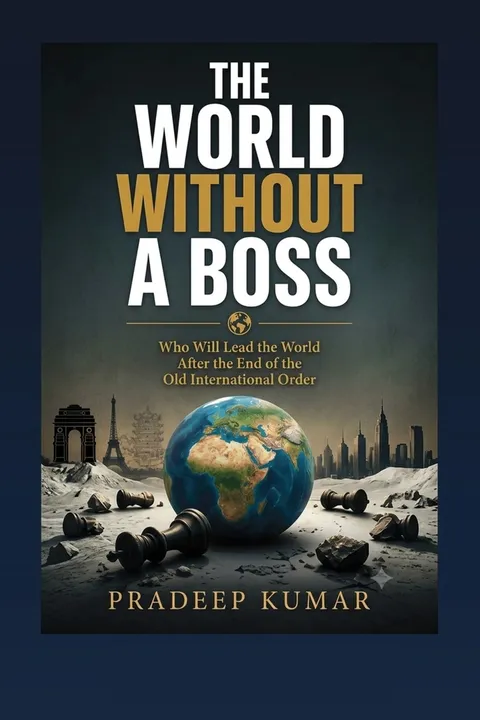
The World Without a Boss
Who Will Lead the World After the End of the Old International Order?
Report an issue
Tell us what's wrong and we'll take a look.
Thanks – we got it. We'll review and follow up if needed.
Who Will Lead the World After the End of the Old International Order?
For decades, the international system was shaped by a dominant American-led order. The United States built alliances, institutions, financial networks, and security partnerships that influenced how much of the world operated.
But that era is changing.
China has emerged as a major economic and strategic power. India is seeking greater strategic autonomy and a larger role in global affairs. Russia remains a significant military and energy power. Europe is reassessing its strategic position. Middle powers are increasingly pursuing flexible partnerships rather than permanently aligning themselves with a single bloc.
At the same time, the foundations of global power are changing.
Trade has become a strategic weapon. Semiconductors have become a geopolitical resource. Energy, critical minerals, artificial intelligence, data, currencies, and supply chains have become increasingly connected to national security.
The result is a world that is more interconnected-and potentially more fragmented-at the same time.
THE WORLD WITHOUT A BOSS asks a fundamental question:
What happens when no single country can-or wants to-manage the global system?
Rather than assuming that America will inevitably decline or that China will inevitably replace it, this book examines the broader transformation taking place across the international system.
Inside, you will explore:
- How the postwar international order was built
- Why American power became central to the modern global system
- The rise of China and its expanding global influence
- India's emerging strategic importance
- Russia's role in the changing geopolitical landscape
- Europe's search for greater strategic autonomy
- The return of middle powers and the growing influence of the Global South
- The new economic battles over trade, technology, energy, and critical minerals
- The geopolitical importance of semiconductors, AI, data, and supply chains
- BRICS and the search for alternatives to established institutions
- Why countries increasingly refuse to choose permanently between competing powers
- The changing strategic importance of the Middle East, Africa, Southeast Asia, Latin America, and the Arctic
- The risks of flexible alliances, miscalculation, and competing spheres of influence
- The future of globalization and international institutions
- What competing American, Chinese, Indian, European, and regional orders could mean for the future
The central question is not simply:
Who will replace America?
It is a more difficult question:
What kind of international system emerges when there is no obvious replacement?
One superpower? Two? Several? Or a world of overlapping regional and economic orders?
The future may not belong to a new global boss.
It may belong to a world in which power is distributed among many countries that must compete, cooperate, negotiate, and coexist without anyone having complete control.
The old international order is changing.
The question is what comes next.








Why Readwise Books?
Readwise Books is an ebook & audiobook platform that automatically logs how much you and your friends read, making it fun and easy to read more. Learn more →